1
Patrick c01.tex
V3 - 09/18/2009
12:15pm
Chapter 1: Building Web Applications in WebLogic
WebLogic Server provides a number of useful sample servlets showing the basic approach for
creating HTTP servlets. These sample servlets are located in the samples/server/examples/
src/examples/webapp/servlets subdirectory beneath the WebLogic Server home directory, a
directory we refer to as $WL_HOME throughout the rest of the book.
Creating the HTML output within the servlet’s service() or doXXX() method is very tedious.
This deficiency was addressed in the Java EE specification by introducing a scripting technology,
JavaServer Pages (JSP), discussed later in this chapter.
Servlets Must Be Registered in the Application
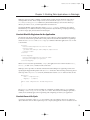
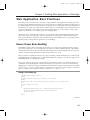
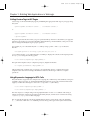
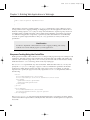
Servlets will only be invoked by the application server if they have been registered in the application and associated with a specific URL or URL pattern. The standard mechanism for registering a
servlet involves <servlet> and <servlet-mapping> elements within the application’s web.xml file
as shown here:
<servlet>
<servlet-name>SimpleServlet</servlet-name>
<servlet-class>
professional.weblogic.ch01.example1.SimpleServlet
</servlet-class>
</servlet>
<servlet-mapping>
<servlet-name>SimpleServlet</servlet-name>
<url-pattern>/simple</url-pattern>
</servlet-mapping>
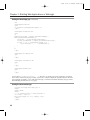
When a user accesses the specified URL, /simple, the application server will invoke the doGet(),
doPost(), or other doXXX() method on the servlet class.
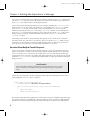
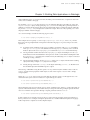
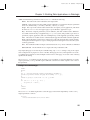
WebLogic Server provides an alternate annotation-based technique for registering servlets and
specifying the mapped URL pattern: The @WLServlet annotation. The following annotation, placed
at the top of the SimpleServlet source file, eliminates the need for web.xml entries for this servlet:
@WLServlet (
name = "SimpleServlet",
mapping = {"/simple"}
)
public class SimpleServlet extends HttpServlet
{
...
}
The @WLServlet annotation syntax includes all of attributes available in the web.xml technique,
including loadOnStartup, initParams, and runAs values. This annotation technique represents a
viable, if non-standard, approach for registering and configuring servlets in your application.
Servlets Have a Life Cycle
A servlet is an instance of the Servlet class and has a life cycle similar to that of any other Java
object. When the servlet is first required to process a request, the application server loads the servlet
3
Page 3