1
Chapter 2 Background
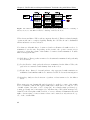
3. to find efficient methods for migrating virtual links and virtual routers without
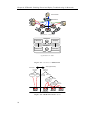
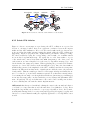
downtimes. The VROOM (Virtual ROuters On the Move) [154] architecture
proposes such live virtual router migration and remapping of virtual links.
Bienkowski et al. [39] provide an optimal offline algorithm for service migration
and competitive migration strategy.
4. to be able to manage the above process efficiently and debug it. This is one
aspect addressed by this thesis.
In summary, Virtual Networks combine system and link virtualization techniques.
They are considered enablers for scalable experimentation with and incremental deployment of network innovations. A number of challenges, including performance,
management and debugging are still under active investigation.
2.2 Software Defined Networks / OpenFlow
As discussed in the last section, virtualization in network components has so far
often lacked the programmability aspect: Virtualized routers typically only provide
configuration isolation between multiple guests. Ethernet VLANs and MPLS tunnels are available, but also provide limited customization. It is possible to build
custom network components from commodity PCs in software, e.g., [59], or from
flexible FPGA based experiment hardware like NetFPGA [95], but these solutions
are constrained in performance, scale and cost and power efficiency. For instance,
PC servers require high performance CPUs for multi-Gigabit dataplane forwarding
that are expensive and consume significant power. Typically, a network optimized
server can provide about 6-8 Gigabit network ports per rack height unit. In contrast, a commodity switch provides full cross-section bandwidth between its ports,
and typically provides 48 ports per height unit.
Recent years have seen increased interest in custom programmable, scalable network
hardware, driven by the requirements of large scale data-centers, researcher seeking
scalable experimental evaluation, and Internet providers.
Scalable experimental evaluation: Researchers have put forward many new proposals for improving the Internet, e.g., in Future Internet initiatives [15]. It has been
recognized that these proposals are not widely adopted unless they can be practically evaluated at scale. This has been a problem in network research so far. Custom
hardware is typically prohibitively expensive to build for a research project, while
software solutions often do not scale to large enough systems. This drives the demand
for testbed components that share some of the properties of commercial commodity
hardware (high line-rates, high fan-out, affordable pricing) with some of the flexibility afforded by software based testbeds (ability to try custom protocols, quickly
innovate).
16