1
E can be used not only as a prover, but as a normalizer for formulae or as
a lemma generator. In this cases, you will not only want to know if E found a
proof, but also need some or all of the derived clauses, possibly with statistical
information for filtering. This is supported with the --print-saturated and
--print-sat-info options for E.
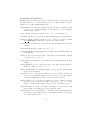
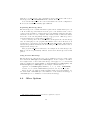
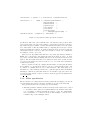
The option --print-saturated takes as its argument a string of letters,
each of which represents a part of the total set of clauses E knows about. The
following table contains the meaning of the individual letters:
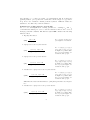
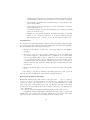
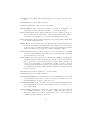
e Processed positive unit clauses (Equations).
i Processed negative unit clauses (Inequations).
g Processed non-unit clauses (except for the empty clause,
which, if present, is printed separately). The above three
sets are interreduced and all selected inferences between
them have been computed.
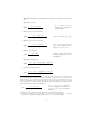
E Unprocessed positive unit clauses.
I Unprocessed negative unit clauses.
G Unprocessed non-unit clause (this set may contain the
empty clause in very rare cases).
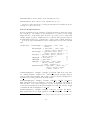
a Print equality axioms (if equality is present in the problem). This letter prints axioms for reflexivity, symmetry,
and transitivity, and a set of substitutivity axioms, one for
each argument position of every function symbol and predicate symbol.
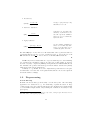
A As a, but print a single substitutivity axiom covering all
positions for each symbol.
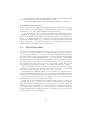
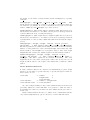
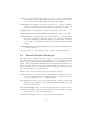
The short form, -S, is equivalent to --print-saturated=eigEIG. If the option --print-sat-info is set, then each of the clauses is followed by a comment
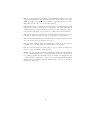
of the form # info(id, pd, pl, sc, cd, nl, no, nv). The following table
explains the meaning of these values:
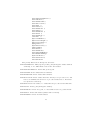
id Clause ident (probably only useful internally)
pd Depth of the derivation graph for this clause
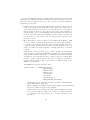
pl Number of nodes in the derivation grap
sc Symbol count (function symbols and variables)
cd Depth of the deepest term in the clause
nl Number of literals in the clause
no Number of variable occurences
nv Number of different variables
35