1
5.4 PDO-Transmission types
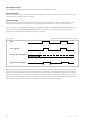
In connection with the PDO transfer, various transmission types are defined in CANopen profile CiA-301. The
transmission type and event control can be set separately for all supported RxPDOs and TxPDOs.
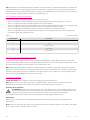
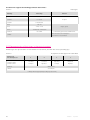
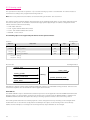
The drive controller supports the following transmission types:
Acyclic synchronous Type no. 0h
Meaning: RxPDOs are evaluated once a device-specific event has been triggered and the next SYNC object has
been received; the TxPDO is then transmitted (from firmware version 2.15-00).
Cyclic synchronous Types no. 01h ... F0h
Meaning: The difference between this and the acyclic synchronous transmission type is that RxPDOs are only
evaluated after receipt of 1–F0h Sync objects and TxPDOs are only transmitted every 1–F0h Sync objects.
Asynchronous types no. FEh und FFh
Meaning: RxPDOs are evaluated immediately on receipt; TxPDOs are transmitted by a device-specific event. The
Sync object is irrelevant to this mode of transfer.
Special feature of type FFh:
For this the event is defined in the associated device profile.
Note: The desired transmission types are set by way of the corresponding CANopen objects 1400h for RxPDOs
and 1800h for TxPDOs.
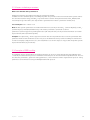
5.5 Event-controlled TxPDO transmission
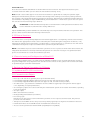
Note: Event control is only active when the relevant “transmission type” is set to asynchronous (FEh or FFh)
Function of event control:
Any bit changes within the TxPDO can serve as an event for the transmission of a TxPDO. This means that only
the mapped contents of this TxPDO can be used as an event for transmission of a TxPDO. Accordingly it is not
possible to send a TxPDO dependent on the changes in content of another TxPDO.
Example:
The status word 6041h is mapped in TxPDO1. TxPDO2 contains the current actual position. A change in the
status word in TxPDO1 can therefore not be used as an event for transmission of the TxPDO2. If this is required,
the status word 6041h can also be mapped in TxPDO2 however.
Selecting events:
In YukonDrive® every bit (or any change to it) in a TxPDO can be defined as an event. By default all bits (max.
64bit = 8byte) are monitored for changes and are evaluated as events. Individual bits can be displayed using
screens, however, and therefore are no longer used for event generation.
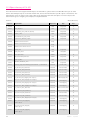
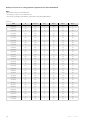
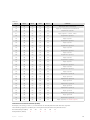
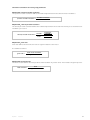
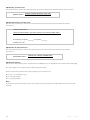
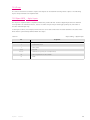
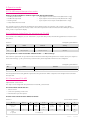
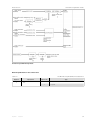
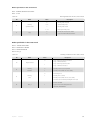
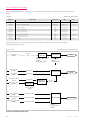
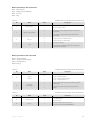
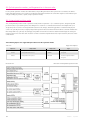
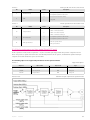
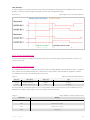
Screens enabling the display of individual bits of TxPDOs are defined in field parameter 2007. Each TxPDO has
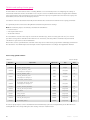
subindexes, and each subindex is responsible for 32 bits of the TxPDO. Its structure is thus as follows:
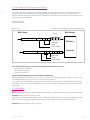
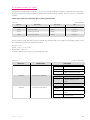
Parameter 2007 - COM_301_EvMask
„Event mask for asynchronous transmit pdos“
06/2015
1003376
31