1
Freescale Semiconductor, Inc.
Program Loading—Extended Conformance
Freescale Semiconductor, Inc...
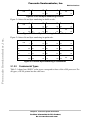
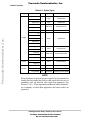
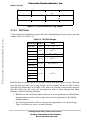
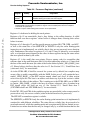
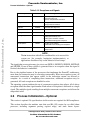
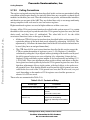
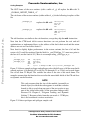
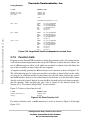
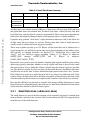
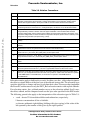
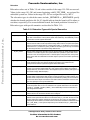
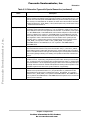
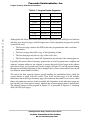
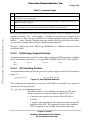
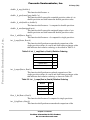
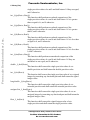
Table 4-1. Program Header Segments
Member
Text
Data
p_type
PT_LOAD
PT_LOAD
p_offset
0x100
0x2_BF00
p_vaddr
0x1000_0100
0x1003_BF00
p_paddr
Unspecified
Unspecified
p_filesz
0x2_BE00
0x4E00
p_memsz
0x2_BE00
0x5E24
p_flags
PF_R+PF_X
PF_R+PF_W
p_align
0x1_0000
0x1_0000
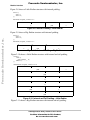
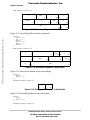
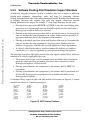
Although the file offsets and virtual addresses are congruent modulo 64 Kbytes for both text
and data, up to four file pages can hold impure text or data (depending on page size and file
system block size).
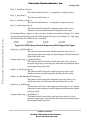
•
•
•
•
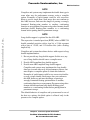
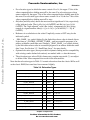
The first text page contains the ELF header, the program header table, and other
information.
The last text page may hold a copy of the beginning of data.
The first data page may have a copy of the end of text.
The last data page may contain file information not relevant to the running process.
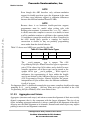
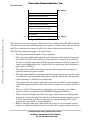
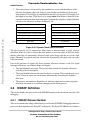
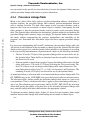
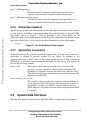
Logically, the system enforces memory permissions as if each segment were complete and
separate; segment addresses are adjusted to ensure that each logical page in the address
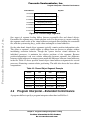
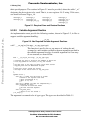
space has a single set of permissions. In the example in Figure 4-1, the file region holding
the end of text and the beginning of data is mapped twice; at one virtual address for text and
at a different virtual address for data.
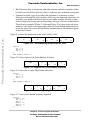
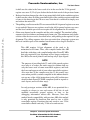
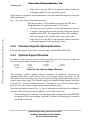
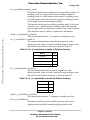
The end of the data segment requires special handling for uninitialized data, which the
system defines to begin with zero values. Thus if the last data page of a file includes
information not in the logical memory page, the extraneous data must be set to zero, rather
than to the unknown contents of the executable file. Impurities in the other three pages are
not logically part of the process image; whether the system expunges them is unspecified.
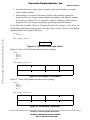
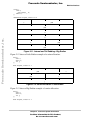
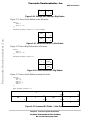
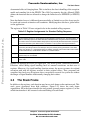
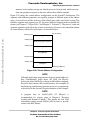
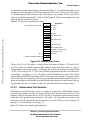
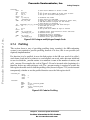
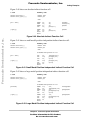
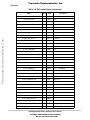
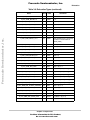
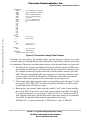
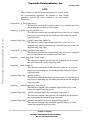
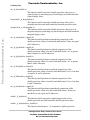
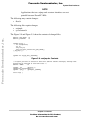
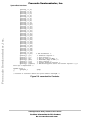
The memory image for the program in Figure 4-1 is presented in Figure 4-2, assuming
4096 (0x1000) byte pages.
e500 Application Binary Interface User’s Guide
For More Information On This Product,
Go to: www.freescale.com