1
deltawave
Technical Reference and User’s Manual
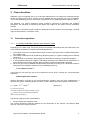
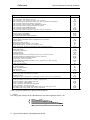
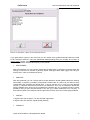
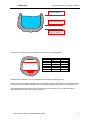
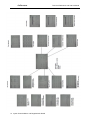
1. Filled pipe in “Partly-filled pipe” mode
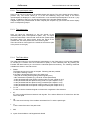
For this case the system can determine the flow with the same process as in “Filled pipe” mode.
3.1.2
Crossing paths
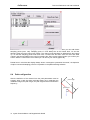
With shortened inflow routes we recommend the use of crossing paths (see chapter 1.3 for achievable
accuracies). Paths which are installed in one section at the same path height are automatically
recognised by deltawave as crossing paths. The measured velocities of two crossing paths are
averaged. This reduces the influence of so called crossflow effects on the accuracy
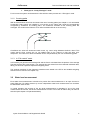
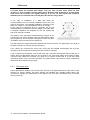
Crossflows can arise with shortened inflow routes, e.g. when using deltawave behind a bend. This
means that the flow vectors are not yet parallel again to the channel or pipe axis after such
disruptions. The influence of these crossflows can be compensated by the use of intersecting paths.
3.1.3
In “Full conduit” mode
In this mode your pipe/channel is always full and the flow is calculated from the product of the average
flow rate and the pipe cross-section. The average flow rate arises from the measured individual rates,
taking into account a position-dependent weighting factor.
The optimum positions for the ultrasonic transducers are stated in the IEC41 and suitable weighting
factors are to be found in the chapter 9.2)
3.2
Water level measurement
Exact water level measurement is decisive for precise flow rate measurement in an open channel or
partly filled pipe. For safety reasons up to two independent water level measurements can therefore
be allocated to each section.
In normal operation the average of the two level measurements is calculated. If one of the level
measurements should fail, the second measurement is used. In this case an alarm relay can also be
switched (see chapter 6 for parameterization)
15
systec Controls Mess- und Regeltechnik GmbH