1
22
FORS User Manual
VLT-MAN-ESO-13100-1543
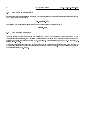
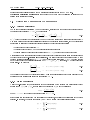
The expected number of counts per binned pixels can be derived by the following equation for a 10th magnitude
3
star , a dispersion of
0.75Å
counts
px
−1
, response
∼ 0.17,
0.75 Å/pxl and an OS-time of 256s:
=
time
∗ bin2
3548
1000 ∗ 10−0.4∗10 ∗ π ∗ 4052 ∗ 0.17 ∗ 0.75 ∗ 0.00028 ∗ 256 ∗ 22
=
1757 photons
=
flux ∗ π ∗ R2 ∗ resp ∗ disp ∗
(2.1)
(2.2)
(2.3)
HIT-I
In case of the imaging modes the number of parameters like seeing, night sky brightness,. . . and the number
of lters is very high and it's hard to present a meaningful table with limiting magnitudes here. The expected
count rates integrated in spatial direction (no slit losses) for a lter width of 1115Å are estimated by the
following equation for a 15th magnitude star:
counts
time
∗ bin
3548
= 1000 ∗ 10−0.4∗15 ∗ π ∗ 4052 ∗ 0.3 ∗ 1115 ∗ 0.00028 ∗ 256 ∗ 2
= 17288 photons
=
flux ∗ π ∗ R2 ∗ resp ∗ fwhm ∗
(2.4)
(2.5)
(2.6)
−
You may have to distribute the 17000 photons over the PSF and to divide with the gain factor of 0.7e
/adu
to estimate peak ux values and the integrated signal to noise ratio.
HIT-MS
Since the exposure time and slit width are free parameters, the limiting magnitude for the HIT-MS mode is the
same as that for the traditional spectroscopic modes. The only dierence is that the charge remain stored on
the detector for longer and are therefore subject to correspondingly higher dark current and cosmic ray events.
For this reason, the HIT-MS mode is best suited to short exposures, which would otherwise be impossible (or
prohibitively expensive in terms of overheads).
3 chap2-foot3