1
1.
Safety Instructions
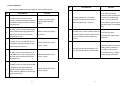
1.4 Operation
1.1 Transport
★ Do not disconnect the mains cable on the UPS system or the building
★ Please transport the UPS system only in the original packaging (to
protect against shock and impact).
wiring socket outlet (shockproof socket outlet) during operations
since this would cancel the protective earthing of the UPS system
and of all connected loads.
1.2 Set-up
★ Condensation may occur if the UPS system is moved directly from a
cold to a warm environment. The UPS system must be absolutely
dry before being installed. Please allow an acclimatization time of at
least two hours.
★ Do not install the UPS system near water or in damp environments.
★ Do not install the UPS system where it would be exposed to direct
sunlight or near heat.
★ The UPS system features its own, internal current source (batteries).
The UPS output sockets or output terminals block may be electrically
lived even if the UPS system is not connected to the building wiring
socket outlet.
★ Ensure that no fluids or other foreign objects can enter the UPS
system.
★ The UPS operates with hazardous voltages. Only qualified
maintenance personnel may carry out repairs
★ Do not block off ventilation openings in the UPS system’s housing.
1.5 Maintenance, servicing and faults
1.3 Installation
★ Do not connect appliances or items of equipment which would
overload the UPS system (e.g. Laser printers) to the UPS outlet
★ The UPS system operates with hazardous voltages. Only qualified
maintenance personnel may carry out repairs.
★ Caution - risk of electric shock. Even after the unit is disconnected
socket
★ Place cables in such a way that no one can step on or trip over them.
★ Do not connect domestic appliances such as hair dryers to UPS
output sockets.
from the mains power supply (building wiring socket outlet),
components inside the UPS system are still connected to the battery
and are still electrically live and dangerous.
★ Before carrying out any kind of servicing and/or maintenance,
disconnect the batteries and verify that no current is present and no
hazardous voltage exist in the terminals of high capability capacitor
such as BUS-capacitors.
2
3