1
ATA’s Sunulator User Guide
5.0
30
Costs
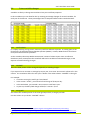
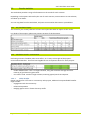
This section of Sunulator allows you to enter information relating to project finances.
Values can be entered separately for each scenario.
5.1
Main Cost Variables sheet
This is the most complex worksheet in Sunulator. It gets easier after this! ☺
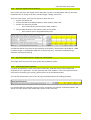
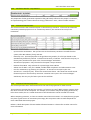
5.1.1 Financial Assumptions
These variables influence the reported financial results.
5.1.1.1
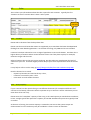
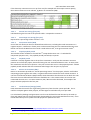
Grid retailer Import Tariff
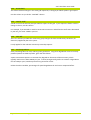
Select from the drop-down box. Each tariff’s settings can be changed in section 3, “Tariffs”.
5.1.1.2
Feed-in Tariff (FiT)
This is how much money or credit is received from the grid electricity retailer per kWh exported to
the grid. You’ll need to check this with the retailer. The electricity consumer cannot benefit from
GST on FiT, so please enter it as an amount excluding GST
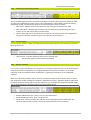
5.1.1.3
Discount Rate for the electricity consumer
Money available now more has more value than money received in 35 years’ time, due to the
opportunity to invest in other ventures. Sunulator uses the discount rate to also calculate a 35-year
discounted cash flow.11 This is used for financial measures such as Discounted Payback Period, Net
Present Value and Return on Investment. You might choose to set this to match the rate at which
you can borrow, or the return you would receive in other investments. If an investor is involved, a
separate rate can be set for them on another sheet. Since dollar values in Sunulator are all entered
in “current dollars”, the discount rate should generally be set to exclude inflation. If you’re using a
mortgage rate of 5.5% and inflation is 3%, then you might choose a discount rate of 2.5%.
5.1.1.4
Horizon
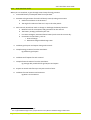
Financial returns are ignored beyond this horizon. Each person or organisation has different
financial circumstances; some may take a longer view than others. For example 10 year might be
appropriate for a profit-driven business focused on short term returns, but 20 years for a fire station
focusing on long-term community benefits.
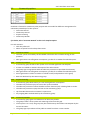
5.1.1.5
GST Rate
This is the rate of Goods and Services Tax. If the entity paying for the solar/battery system can claim
back the GST component from the government, it may be appropriate to set this to zero.
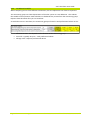
5.1.1.6
REC price
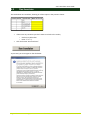
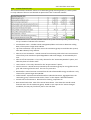
This refers to certificates that account for a solar system’s greenhouse gas reduction.
At the time of writing, solar systems installed by an accredited supplier are eligible for Renewable
Energy Certificates (RECs). For systems smaller than 100 kW they are known as Small Technology
Certificates (STCs) and can be claimed up-front, effectively discounting the purchase price. This
discount is generally managed by the system installer.
11
See appendix B and http://en.wikipedia.org/wiki/Discounted_cash_flow#Discount_rate
Page 30 of 61
www.ata.org.au
Saved 19/08/2015 2:51:00 PM
Printed 20/08/2015 7:57:00 AM