1
PROGRESS AND OUTCOMES OF THE ILO’S PROGRAMME IN THE REGION
Areas of intervention
Progress and outcomes
Certifying skills
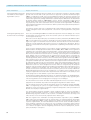
In the period to which this report refers, CINTERFOR has helped the social partners and training authorities to understand, analyse, discuss and endorse the Human Resources Development Recommendation, 2004 (No. 195).
Several countries in the region have adopted measures in line with Recommendation No. 195.
Argentina, for example, has a special section in the Ministry of Labour that deals with the recognition and certification of vocational skills. Brazil is setting up an inter-ministerial committee to
develop a skills certification system, while its National Industrial Training Service (SENAI) is
working on skills recognition, and the Ministry of Labour is supporting various pilot schemes in
this area.
In Chile the Ministries of Education and Labour are participating in a joint project to establish
permanent education and training activities, which include standardizing qualifications and
skills and recognizing previous apprenticeships.
Under the leadership of the National Training Service (SENA) of Colombia, a project is under
way to recognize skills acquired through experience and to improve the quality of private training schemes.
Adoption of policies on quality
and upgrading training
institutions
One of the most tangible results in terms of training in the region has been the progress made
in consolidating quality management in institutions and the continuous efforts to make training more effective. To date, more than 250 vocational training institutions, training centres,
operating units and technological development laboratories have been certified as meeting
quality standards. Several institutions already arrange for feedback on the quality of their
training.
The horizontal cooperation provided by CINTERFOR has made it possible for several institutions to help others which are trying to get their training up to a certified standard.
Some of the steps taken by the vocational training institutions in the region should be
highlighted. In Brazil SENAI is pursuing a policy of quality management and has achieved
certification of most of its training centres. Similar measures are being taken by the Technical
Institute for Training and Productivity (INTECAP) in Guatemala, the National Service for Training
in Industrial Employment (SENATI) in Peru, the National Training Service (SENA) in Colombia,
the National Institute of Technical and Vocational Training (INFOTEP) in the Dominican
Republic, the National Training Institute (INA) in Costa Rica, the General Directorate of Employment Training Centres of the Mexican Department of Public Education, and the Human
Employment and Resource Training Programme of the National Training Agency (HEART/NTA)
in Jamaica, which aims to provide training and certification for all working-age Jamaicans.
Innovations to improve
access to vocational training
programmes for young
unemployed people
Various innovative measures to improve access to vocational training programmes for young
unemployed people have been taken. The Ministry of Labour of Argentina has developed a
strategy to integrate the supply of training in the provinces with training programmes for young
unemployed people. In Chile computer literacy programmes are included as part of developing skills for employability in youth training programmes financed by the Ministry of Labour
through the National Training and Employment Service (SENCE). An “Enterprise” fund has
been established by SENA in Colombia to finance small enterprise-creation projects for young
people participating in training schemes. In Guatemala INTECAP’s training centres are extending their working hours to include late sessions for the benefit of workers who cannot attend daytime courses. In Uruguay the Ministry of Labour is developing a training programme
aimed at female heads of households who are most vulnerable to unemployment.
Strengthening national
vocational training networks
and institutions
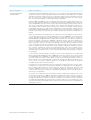
In Central America a subregional network of vocational training institutions (VTIs) is being created to coordinate policy between the tripartite management bodies of VTIs in the subregion.
Training institutions such as INTECAP in Guatemala, INA in Costa Rica and the National
Vocational Training Institute (INAFORP) in Panama have established links with the ministries
of education and identified joint strategies and activities in adult education programmes.
The Caribbean Association of National Training Agencies (CANTA) is a Caribbean association
for promoting leadership, identifying weaknesses and making recommendations on how to
improve vocational training. Through this association an exchange of good practice is taking
place between the countries of the subregion, and micro- and small enterprises in Jamaica,
Barbados, Saint Lucia and Trinidad and Tobago are receiving training.
(continued overleaf)
ILO ACTIVITIES IN THE AMERICAS, 2003-2006
23