1
TROUBLESHOOTING (Continued)
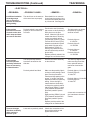
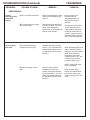
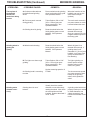
--PROBLEM-Top face of
bedknife is
ground in a
convex shape
(high in the
center)
BEDKNIFE GRINDING
--POSSIBLE CAUSE--
--REMEDY--
--REASON--
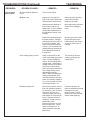
A--Grinding wheel loading up
with grinding grit.
Dress the wheel prescribed in
the Operators Manual.
A loaded wheel creates
undue pressure on the
surface being ground. Both
ends of bedknife move
because of this pressure,
allowing bedknife to rock on
the middle support.
B--Too heavy a grind on the
final grinding pass.
Follow the procedures in the
Operators Manual. On the
final pass, crank down only
about .001" [.025 mm]. Let the
wheel spark out for 10-20
passes at about 5 ft/min, with
no additional infeed.
For precise grinding, sparking-out process is critical. It
eliminates excessive finalgrinding pressure on centers
and middle support, which
helps maintain grinding
straightness.
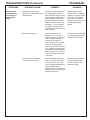
C--Gib screws loose, or
carriage infeed screw loose.
Tighten gib screws to prevent
movement (See Page 23).
Also check for any grinding grit
buildup behind the gib. Eliminate backlash in horizontal
handwheel (See Page 24).
D--Carriage has varying load
in either direction, because of
grit buildup inside linear
bearings.
With linear actuator released
from the carriage, check for a
5 lb [2.25 kg] maximum
traversing load in both directions. If load varies, or carriage linear bearings are
excessively noisy, replace
bearings (See Page 19).
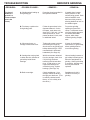
E--Rails not straight.
Check straightness. If not
straight, consult the factory
through your distributor. (This
is carefully checked at the
factory, so it is unlikely to be
the cause.)
31
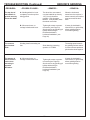
A loose gib, backlash in
infeed screw, or grit buildup,
allows grinding head to
move when grinding.
Uneven loading because of
grit buildup in bearings can
affect the straightness of
grinding. When grit buildup
is excessive, bearings may
be noisy and must be
replaced.