1
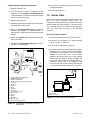
Electric Oil-Drain/Oil-Fill Procedure
2.3 Battery
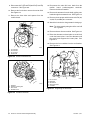
1. Connect the pump to the end of the oil-drain hose.
2. Place the pump outlet hose into a container.
Remove the oil-fill cap(s). One is located near the
top of the engine on the valve cover and one is
located near the governor.
Consult the battery manufacturer’s
regarding battery care and maintenance.
instructions
WARNING
3. Activate the pump until all of the oil is removed.
Allow ample time for all of the oil to drain.
4. Turn the valve at the base of the oil-drain hose to
the closed position.
5. Replace the engine oil filter.
6. Fill the engine crankcase to the specified level with
oil. The figures in Section 1 show typical oil fill
locations. See Figure 2-1 for oil selection and
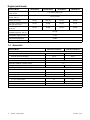
Figure 2-2 for oil capacities.
7. Start the generator set and check for oil leaks.
8. Stop the generator set. Check the oil level. Add oil,
as necessary, to bring the level up to the Max mark
on the dipstick.
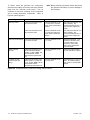
L (Qts.)
5EOZ and 4EFOZ
3.0 (3.2)
8EOZ and 6.5EFOZ
2.3 (2.4)
9EOZ and 8EFOZ
5.2 (5.5)
10EOZ and 9EFOZ
5.2 (5.5)
Figure 2-2
8
Model
Oil Capacities
Section 2 Scheduled Maintenance
Sulfuric acid in batteries.
Can cause severe injury or death.
Wear protective goggles and
clothing. Battery acid may cause
blindness and burn skin.
Battery electrolyte is a diluted sulfuric acid. Battery acid
can cause severe injury or death. Battery acid can cause
blindness and burn skin. Always wear splashproof safety
goggles, rubber gloves, and boots when servicing the battery.
Do not open a sealed battery or mutilate the battery case. If
battery acid splashes in the eyes or on the skin, immediately
flush the affected area for 15 minutes with large quantities of
clean water. Seek immediate medical aid in the case of eye
contact. Never add acid to a battery after placing the battery in
service, as this may result in hazardous spattering of battery
acid.
Battery gases. Explosion can cause severe injury or
death. Battery gases can cause an explosion. Do not smoke
or permit flames or sparks to occur near a battery at any time,
particularly when it is charging. Do not dispose of a battery in a
fire. To prevent burns and sparks that could cause an
explosion, avoid touching the battery terminals with tools or
other metal objects. Remove all jewelry before servicing the
equipment. Discharge static electricity from your body before
touching batteries by first touching a grounded metal surface
away from the battery. To avoid sparks, do not disturb the
battery charger connections while the battery is charging.
Always turn the battery charger off before disconnecting the
battery connections. Ventilate the compartments containing
batteries to prevent accumulation of explosive gases.
TP-6053 7/04