1
Camera Hacker: converting AIS to mic audio jack
Page 7 of 9
Then take a figure-8 mike and place it behind the mid mike, pointing 90
degrees away from the "Mid" mike. This is the "Side" mike. Now, instead of
plugging one mike into your left channel and the other into your right channel,
you'll need to "decode" the signal by finding the sum and difference of the
signals in the two mikes. That is, the left channel on the final recoding is
created by summing the signals from the two mikes and the right channel by
taking the mid signal and subtracting the side signal. When combined to
mono, you are left with the Mid signal, making mid-side inherently monocompatible."
HTH,
-Shawn
Shawn Hughes
Mon, 25 Sep 2006 18:55:48 -0700
Shawn is correct in that a dual op-amp is used on the small circuit board
inside the HST1 to decode the left and right channels. Left is passed through,
and right is created by subtracting the left signal from the combined signal of
the center mic. I traced through the board layout and found a great place for
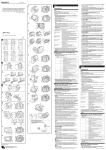
adding the five connect points of a closed circuit 3.5mm mini stereo jack to
get a true L & R channel feed. It requires cutting two traces on the board with
an exacto knife or drimmel, then wiring the jack as shown.
Z
Attached Image:
11/7/2006