1
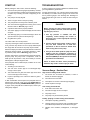
Pump is not delivering up to capacity:
1. The pump is starving or cavitating – see Pump is
noisy, item 1.
2. The strainer is partially clogged.
DO’S AND DON’TS
Do’s and Don’ts for installation, operation and maintenance
of Viking pumps to assure safe, long, trouble-free operation.
3. There is an air leak somewhere in the suction line.
Installation:
4. Running too slow. Is the motor wired correctly and at the
appropriate speed?
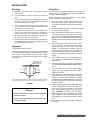
1. DO install the pump as close to the supply tank
as possible.
5. Pressure relief valve is set too low, stuck open or has a
damaged poppet seat.
2. DO leave working space around the pumping unit.
6. The bypass line around the pump is partially opened.
4.DO install a strainer in the suction line.
7. The pump is worn out.
Pump takes too much power (stalls the motor):
1. The pump sequence valve set too high.
2. Liquid is more viscous than the unit is sized to handle.
3. The system pressure relief valve is set too high.
4. The pump is misaligned.
3. DO use large, short and straight suction port.
5. DO a double check of alignment after the unit is
mounted and the piping is hooked up.
6. DO provide a pressure relief valve for the discharge side
of the pump.
7.DO check for proper rotation.
8. DO use a return line filter.
9. DO use an industrial grade hydraulic oil.
10. DO use piping, hose and fittings rated for maximum
system pressure.
Operation
1. DON’T run the pump at speeds faster than 3600 RPM.
2. DON’T allow the pump to develop pressure higher than
those shown in the Viking product catalog at that size.
3. DON’T operate pumps at temperatures above or below
limits shown in the Viking product catalog for the model.
4. DON’T operate the unit without all guards in place.
5. DON’T operate the pump without a pressure relief valve
in the discharge piping; be sure the valve is mounted
and set correctly.
6. DON’T stick fingers in ports of the pump!!! Fingers may
be pinched between the gears.
7.DON’T work on the pump unless the driver has been
“locked out” so it cannot be started while work is being
done on the pump.
Maintenance:
1. DO record the pump model number and serial number
and file for further use.
2. DO have spare parts, pump or stand-by units available;
particularly if the pump is an essential part of the key
operation process.
3. DO obtain, read and keep all maintenance instructions
furnished with pump.
SECTION TSM
1470
ISSUE
F
PAGE 6 OF 8