1
4. APPROACH/RESOURCES. Potential models and manufacturers of surgical suction units were
identified from the online ECRI Product Comparison System, general searching of the Internet, and
a 2007 Vendor Day at Fort Detrick. The Food and Drug Administration’s (FDA) 510(k) database
was also searched for recent device approvals for suction machines (product code BTA).
5. FINDINGS. ECRI has Product Comparisons for four different classes of aspirators:
emergency, surgical, thoracic, and uterine. For the surgical aspirator category, ECRI identified over
20 manufacturers of approximately 60 different models. Many of these models are marketed in
countries outside the United States and are not cleared by the FDA. FDA-cleared surgical aspirators
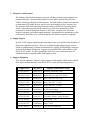
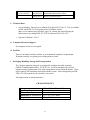
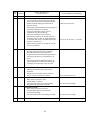
and their associated characteristics (identified by ECRI) are listed in Appendix A. None of those
models meet the requirement to provide an intermittent suction mode. Also, all but one of them is
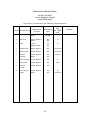
designed to be operated solely from standard AC power. Because of this, a separate table of
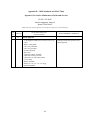
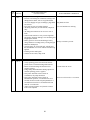
candidate suction machines (Appendix B) was constructed for suction machines that do have an
intermittent mode (these models were not included in ECRI’s Product Comparisons but were
identified from other sources). The information in Appendix B emphasizes the requirements of
greatest interest to the military, rather than to ECRI, and the table excludes models for which the
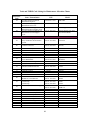
maximum vacuum level does not go above the “low” level (200 mm Hg). Photos of the devices
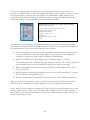
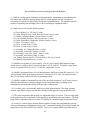
considered are provided in Appendix C.
6. ANALYSIS. Only one model of aspirator meets all of the ECs – the currently fielded model
(Impact 326M). Other (domestic) models that have both continuous and intermittent suction
modes do not meet the criteria for maximum vacuum level or free air flow, are not operable from
multiple power sources, have no internal battery, and would be unlikely to meet air worthiness
requirements. They are also much larger and heavier than the Impact model. Some are much
quieter than the 326M, but it should be noted that this is at least partly because the noise levels for
the other models were measured at lower vacuum/flow levels because they are not designed to
operate at the levels the Impact machine does. None of the internationally marketed models (i.e.,
non FDA-cleared) meet all of the ECs either. The only other potential product identified was one
referenced in a 1978 report about a multipurpose suction pump designed at the USAF School of
Aerospace Medicine for use on aircraft. No further information regarding the status of that device
could be obtained.
It should be noted that Impact will be introducing a next-generation suction machine similar to the
326M later this year (estimated around 3rd or 4th Quarter 2008). Expected specifications for the new
device (model 330M) are included in Appendix B and an illustration in Appendix C. The new model
is expected to meet all of the ECs but will only be slightly quieter than the present model. Some of
the major design improvements will include the following:
11