1
transmission. It is better to apply the brakes periodically to slow down, then release them to coast up to
speed, then brake again, rather than riding them continuously down a hill, which may cause the brakes to overheat and lose performance.
You will be surprised to find that downhill momentum
will carry you farther up the next hill than it would in
a gas car. With practice, you can learn to use this to
great advantage, and sometimes travel several miles using
very little throttle or none at all.
It is not necessary to use the clutch to brake to a
stop. If you do use the clutch, leave it in (or put the
car in neutral) for several moments after the car stops.
The momentum of the flywheel will keep the motor spinning
for some time. If you coast to a complete stop with the
clutch in, then release it before the motor stops spinning, the car will buck.
Use extra care in parking lots and around pedestrians, bicyclists, and animals. The car is virtually
silent, and may not be noticed as it approaches.
Performance of the car does not decrease steadily
with battery pack discharge, nor does it stop abruptly,
as it does when a gas car is out of fuel. Instead,
performance remains fairly consistent throughout most of
the car's range. As the pack nears total depletion, the
car will grow gradually more sluggish over the last five
to ten miles.
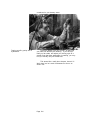
"The ammeter
is your
'efficiency gauge'."
Gauges & Warnings
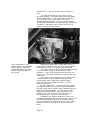
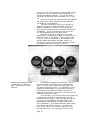
The ammeter is your 'efficiency gauge'. By varying
gears and throttle pressure while watching for the lowest
current reading, you can determine the most efficient
technique for accelerating, maintaining speed, or climbing a hill. Since an electric car is typically used on
the same routes repeatedly, you can develop the optimum
technique for each portion of your normal drive. Typical
readings will be:
400 amps for momentary full acceleration
100 amps cruising on flat roads
200 amps on slight grades
300 amps on steep grades
0 when coasting
Lower amp draws also mean cooler operating temperatures—and less stress—for the motor and controller.
In simplistic terms, amperage increases as voltage
decreases. You can verify this by watching your gauges
as you accelerate. This is one reason a 96-volt system
is better than a 72-volt system. With higher voltage
available, it needs less amperage. This is also the
reason why an EV is most efficient at high rpm, meaning
the top safe speed (below 'redline') for a particular
gear. In general, higher rpm means higher voltage and
speed but lower amperage and torque.
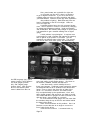
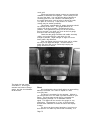
Your car may have a voltmeter for battery pack
voltage, or a state-of-charge meter. We talked earlier
about the specific peculiarities of sampling-type stateof-charge meters. We'll talk here about how to use a
real-time analog state-of-charge meter or voltmeter.
Both of these gauges provide the same information.
The state-of-charge displays it as a percentage from 0 to
Page 116