1
which contains lubricating oil for lubricating different parts of the engine.
Lecture Hour 2: FOUR STROKE ENGINE
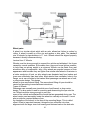
A four-stroke engine (also known as four-cycle) is an internal combustion
engine in which the piston completes four separate strokes which comprise a
single thermodynamic cycle. A stroke refers to the full travel of the piston along
the cylinder, in either direction. While risqué slang among some automotive
enthusiasts names these respectively the "suck," "squeeze," "bang" and "blow"
strokes, they are more commonly termed
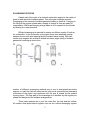
1. INTAKE: this stroke of the
piston begins at top dead center. The piston descends from the top of the
cylinder to the bottom of the cylinder, increasing the volume of the cylinder. A
mixture of fuel and air is forced by atmospheric (or greater) pressure into the
cylinder through the intake port.
2. COMPRESSION: with both intake and exhaust valves closed, the piston
returns to the top of the cylinder compressing the air or fuel-air mixture into the
cylinder head.
3. POWER: this is the start of the second revolution of the cycle. While the
piston is close to Top Dead Centre, the compressed air–fuel mixture in a
gasoline engine is ignited, by a spark plug in gasoline engines, or which ignites
due to the heat generated by compression in a diesel engine. The resulting
pressure from the combustion of the compressed fuel-air mixture forces the
piston back down toward bottom dead centre.
4. EXHAUST: during the exhaust stroke, the piston once again returns to top
dead centre while the exhaust valve is open. This action expels the spent fuel-air
3