1
How to optimize the Detector
Optimizing Selectivity
5
Optimizing Selectivity
Quantifying Coeluting Peaks by Peak Suppression
In chromatography, two compounds may often elute together. A
conventional dual- signal detector can only detect and quantify both
compounds independently from each other if their spectra do not overlap.
However, in most cases this is highly unlikely.
With a dual- channel detector based on diode- array technology, quantifying
two compounds is possible even when both compounds absorb over the
whole wavelength range. The procedure is called peak suppression or
signal subtraction. As an example, the analysis of hydrochlorothiazide in
the presence of caffeine is described. If hydrochlorothiazide is analyzed in
biological samples, there is always a risk that caffeine is present which
might interfere chromatographically with hydrochlorothiazide. As the
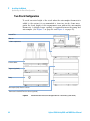
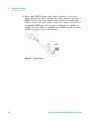
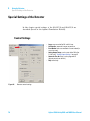
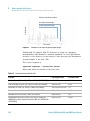
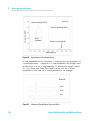
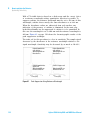
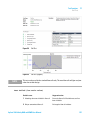
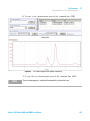
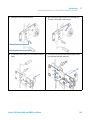
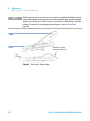
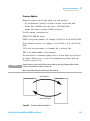
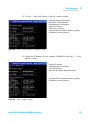
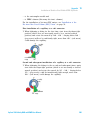
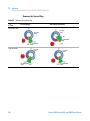
spectra in Figure 40 on page 113 shows, hydrochlorothiazide is best
detected at 222 nm, where caffeine also shows significant absorbance. It
would therefore be impossible, with a conventional variable wavelength
detector, to detect hydrochlorothiazide quantitatively when caffeine is
present.
LA&'%)cb!XV[[Z^cZ
LA''''cb!]nYgdX]adgdi]^Vo^YZ
LA('+%cb!gZ[ZgZcXZidhjeegZhh
]nYgdX]adgdi]^Vo^YZ
LA)'-'cb!gZ[ZgZcXZidhjeegZhhXV[[Z^cZ
LA(
LA&
Figure 40
LA'
LA)
LVkZaZc\i]cb
Wavelength Selection for Peak Suppression
Agilent 1260 Infinity DAD and MWD User Manual
113