1
DESCRIPTION
3.6
NOTE:
Manometer
The use of a manometer is strongly
recommended at all times.
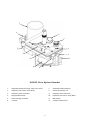
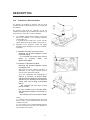
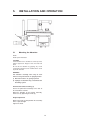
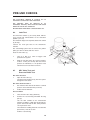
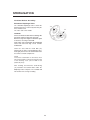
The manometer (1) is located on the top of the
manifold block to the rear of the expiratory valve .
Manometer scale:
–10 to +100 cmH2O
Manometer accuracy:
±5%
(within range
+10 to 80 cmH2O)
1
2
CAUTION
Remove the manometer before autoclaving the
absorber unit.
3.7
Heater Unit (option)
The heater unit (2) limits the build up of moisture in
the gas paths through the absorber.
The heater operates automatically when mains
power is connected (see section 5.5).
CAUTION
Do not autoclave the heater unit.
3.8
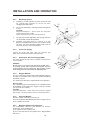
Bypass System
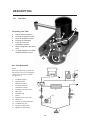
The absorber reverts to bypass mode when the
lever is turned clockwise to release the canister.
Expiratory gas cycles to the patient, without
passing through the absorbent.
It is strongly recommended that a capnometer
is used to prevent the risk of hypercapnia.
3.9
End Tidal Carbon Dioxide
Monitoring
The use of end tidal carbon dioxide monitoring
is strongly recommended.
Connection of a suitable analyser must be made
between the patient’s airway and the patient
connection Y-piece.
Detailed instructions are provided
manufacturers of the analyser.
by
the
8