1
Contents
Page 16 of 19
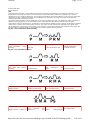
activates post injections (which heat up the exhaust gases directly);
The effects of controlled regeneration
During regeneration, the engine ECU corrects some operating strategies:
- Engine torque
At constant engine rpm and load, post injection increases an engine torque increase. In order to maintain the same
driving conditions and avoid engine torque variations, the engine ECU:
-reduces fuel flow during main injection,-adjusts supercharging pressure.
- Supercharger pressure adjustment
To maintain the engine torque unchanged during regeneration, the engine ECU reduces supercharger pressure to
improve handling.
This is because the exhaust gases during regeneration are hotter and tend to increase turbine rotation.
- Exhaust gas recirculation adjustment (EGR)
At each regeneration, the engine ECU may actuate two EGR solenoid valve strategies:
-EGR closed: in the case, several post-injections are maintained in order to keep the exhaust gas temperature high.EGR slightly open: in this case, the recycled gases make the air/fuel mixture richer; as a consequence, the exhaust
gases are hotter than there are fewer post injections.
- Motorized throttle
During particulate filter regeneration, in case of cut-off, the post injection only is maintained to keep the exhaust
gases at approximately 600°C in the oxidising catalyser. In these conditions, the engine ECU reduces the motorised
throttle opening to decrease the fresh air flow taken in by the engine. This strategy prevents excessive exhaust gas
cooling to prevent compromising the DPF regeneration process.
Service regeneration
Service regeneration is managed by the ECU and only activated by a diagnostic operator using the diagnostic tool
(EXAMINER).
Regeneration must be carried out after the engine ECU lights up (MIL) and in presence of error code P1206.
The engine must be warm to activate Service regeneration.
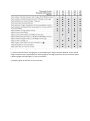
If the claimed fault is present, check the parameters in Table 1 Examiner parameters shown in the Diagnostic
section before running a Service regeneration.
Take note if the data determined by Examiner before the Service because the data must be submitted to TE.SE.O
or other departments if the fault is not solved.
Drive a complete cycle to regenerate the filter completely after the regeneration procedure.
For DPF system diagnostics
DIAGNOSTICS (EDC16 C39 - F4)
Parameters
The following items (specific for DPF versions) are listed in the parameter environment:
-Differential sensor pressure-Particulate filter obstruction-Pre-cat temperature-Particulate filter temperature-Particulate
filter state-Average distance of last five regenerations-Average time of last five regenerations-Average temperature of
last five regenerations-Odometer last regeneration (km)-Odometer last DPF replacement (km)
Differential sensor pressure
This indicates the back pressure value upstream of the particulate filter.
Particulate filter obstruction
This indicates the value expressed in percentage (%) of the estimated particulate matter by the CCM
The Particulate filter obstruction parameter is calculated by the CCM on statistic basis and only meaningful when
error P1206 is not present.
Pre-cat temperature
This indicates the exhaust gas temperature measured by the sensor located at the pre-cat outlet.
Particulate filter temperature
this indicates the exhaust gas temperature measured by the sensor located at the particulate filter inlet.
Particulate filter state
This indicates the level of obstruction of the particulate filter in all conditions by the CCM.
Average distance of last five regenerations
This indicates the distance travelled between one DPF regeneration and the other.
The engine ECU calculates the weighed average of the sum of the last five distances (km) travelled between one
regeneration and the next (the weight of the last RGN is 70%).
Average time of last five regenerations
This indicates the average time required for the last five particulate filter regenerations.
Average temperature of last five regenerations
This indicates the average temperature of the last five particulate filter regenerations.
Odometer last regeneration (km)
This parameter indicates the distance travelled since the last regeneration (force and/or spontaneous). The value is set
to 0 at the end of the successful regeneration (spontaneous and/or automatic using instrument) or when the
particulate filter is replaced. If the engine ECU is replaced, the parameter must be updated with the same odometer
reading in the CCM.
Odometer last DPF replacement (km)
http://aftersales.fiat.com/elearn/frmMainPage.aspx?nodeID=250925583&languageID=... 5/01/2012