1
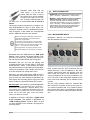
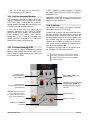
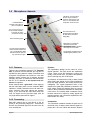
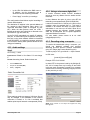
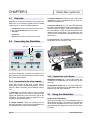
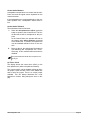
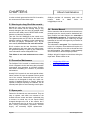
3.2.2 About return signal to the phone Most of the existing telephone hybrids on the market today, were designed over 30 years ago for analogue telephone exchanges (PBX) Solidyne hybrids, however, have been recently designed for private or public telephone exchanges today, which are fully digital. The new technology Hybrids are recognized because they have no control of air return level to phone line. This is because inside the hybrid Solidyne uses an audio processor for return signal that includes AGC, peak limiter & audio signal filtering. Therefore the return is automatically adjusted during the transmission and its level is the maximum allowed by the modern digital telephone exchanges. If you want to check the return level to phone line, you must use an oscilloscope to be placed in parallel with the telephone line and must verify that the signal is 2 volts peak to peak. Please note that above this level the return can produce problems that will cause intermodulation distortion in the audio signal that goes to air. So in Solidyne hybrids we use a processed return channel, to avoid distortion at the on-air signal. There are hybrids manufacturers that maintain the return control level as they did in the past. This allow operators to adjust "by hunch" this critic level. This makes the voices of the reporters and interviewed people distorted or with coloration. In Solidyne obviously, we keep a high grade of excellence in the audio quality of the hybrid on-air sound. And that quality do not depend on the operator settings. Note that the Solidyne Hybrid on- air audio quality of the local journalists is ever perfect and without any coloration. To achieve this level of quality we use a narrowband return filter. Then the return signal is limited to the band 400 – 2.200 Hz in order not to distort the signal to the air. This narrow band intelligibility remains high (due to processing) but occasionally may seem to the remote people that it "has little volume" because his band is narrow. This should not worry because it is a subjective sensation that does not affect the intelligibility of speech. 3.2.3 Null-factor This adjustment is only for LAND lines. The rejection factor expresses the capacity of the hybrid to avoid that the transmitted signal returns distorted to the air. Whichever greater it’s this factor more “clean” will be the sound quality of the local speaker on the air. In order set the rejection, proceed as following: 1. Make a calling through one hybrid of the console. Ask a speaker to talk into the microphone to the interviewee. Increase the level from "Telephone Control" until the voice of the interviewee move the PGM VU meter into the red zone. Page 19 2. Listening to the voice of the local speaker from the PGM monitor, carefully turns the preset “Null” until reducing to zero the distortion superposed to the speaker’s voice. Please make this adjust when the console is installed. 3. In case that the phone line connected to the console be changed, this adjustment must be repeated. 3.3 Monitor section 3.3.1 Using monitors and headphones At the monitors section you can observe the following areas: Studio Monitor: here you define what signal you will listen at the Studio monitors and headphones. Control Room Monitor: define what signal you will listen at the Control Room monitors and headphones. CUE: set the CUE level of the built-in loudspeaker. There is a knob to manages the level of headphones and monitor outputs for the Studio. Usually the monitoring level adjusts from the console for a comfortable listening in the headphones. In case that you wants individual control for each headphone; you can use an additional headphones mixer (Solidyne Studio-box or similar), or make customized external level controls using a potentiometer of 2 x 1 Kohm, mounted on the table. The Studio monitors have their own gain control, since the console’s output was designed to operate with powered speakers. Remember that when the microphones are enabled the audio in the studio monitors is muted, to avoid feedbacks loops. Like the Studio section, the Control Room has a unique knob for headphone ans speakers. Control Room monitors must be powered units (active speakers). Using the routing switches you can choose the signal that will be listened in monitors and headphones. The assignments for Studio and Control Room are independent. The options are: PGM to listen the console output. REC allows the listening of the channels that are assigned to recording output. AIR switches to an additional input, designed to connect an external tuner in order to monitoring the transmission from the www.SolidynePro.com