1
9/8/98
AC 43.13-1B
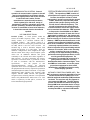
Voltage check of electrical system with portable
precision voltmeter.
Condition of electric lamps.
Missing safety shields on exposed high-voltage
terminals (i.e., 115/200V ac).
FUNCTIONAL CHECK OF STAND-BY OR
EMERGENCY EQUIPMENT. An aircraft should
have functional tests performed at regular
intervals as prescribed by the manufacturer.
The inspections or functional check periods
should be clearly stated in the aircraft
maintenance manual, along with the overhaul
intervals.
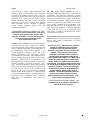
CLEANING AND PRESERVATION. Annual
cleaning of electrical equipment to remove
dust, dirt, and grime is recommended. Suitable
solvents or fine abrasives that will not score
the surface or remove the plating may be used
to clean the terminals and mating surfaces if
they are corroded or dirty. Only cleaning
agents that do not leave any type of residue
must be used. Components must be cleaned
and preserved in accordance with the aircraft
handbooks or manufacturer’s instructions.
Avoid using emery cloth to polish commutators
or slip rings because particles may cause
shorting and burning. Be sure that protective
finishes are not scored or damaged when
cleaning. Ensure that metal-to-metal
electrically bonded surfaces are treated at the
interface with a suitable anti-corrosive
conductive coating, and that the joint is sealed
around the edges by restoring the original
primer and paint finish. Connections that must
withstand a highly corrosive environment may
be encapsulated with an approved sealant in
order to prevent corrosion.
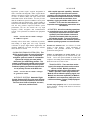
BATTERY ELECTROLYTE CORROSION.
Corrosion found on or near lead-acid batteries
can be removed mechanically with a stiff
bristle brush and then chemically neutralized
with a 10 percent sodium bicarbonate and
water solution. For Nickel Cadmium (NiCad)
batteries, a 3 percent solution of acetic acid
can be used to neutralize the electrolyte. After
neutralizing, the battery should be washed with
clean water and thoroughly dried.
ADJUSTMENT AND REPAIR. Accomplish
adjustments to items of equipment such as
regulators, alternators, generators, contactors,
control devices, inverters, and relays at a
location outside the aircraft, and on a test
stand or test bench where all necessary
instruments and test equipment are at hand.
Follow the adjustment and repair procedures
outlined by the equipment or aircraft
manufacturer. Replacement or repair must be
accomplished as a part of routine maintenance.
Adjustment of a replacement voltage regulator
is likely since there will always be a difference
in impedance between the manufacturer’s test
equipment and the aircraft’s electrical system.
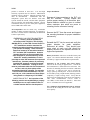
INSULATION OF ELECTRICAL EQUIPMENT. In
some cases, electrical equipment is connected
into a heavy current circuit, perhaps as a
control device or relay. Such equipment is
normally insulated from the mounting structure
since grounding the frame of the equipment
may result in a serious ground fault in the
event of equipment internal failure. Stranded
18 or 20 AWG wire should be used as a
grounding strap to avoid shock hazard to
equipment and personnel. If the end
connection is used for shock hazard, the
ground wire must be large enough to carry the
highest possible current (0.1 to 0.2 ohms max.).
CAUTION: Turn power off before cleaning.
Par 11-8
Page 11-484 (and 11-4)