1
10
CHAPTER 2. LOGS
other is that logs memoize cases/unique cases, so that if a log is created by providing the unique cases,
the first time that all the cases are demanded they are computed and stored. Further modification of
unique cases will not trigger the recomputation of all the cases. For this reasons the safe way to modify
a log is simply to create a new one by selecting the appropriate cases.
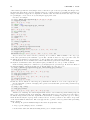
Let us see an example:
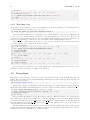
>>> log = pmlab.log.Log(cases=[[’A’,’B’],[’C’,’D’]])
>>> log.get_cases()
[[’A’, ’B’], [’C’, ’D’]]
>>> import copy
>>> cases = copy.deepcopy(log.get_cases())
>>> cases
[[’A’, ’B’], [’C’, ’D’]]
>>> del cases[1][1]
>>> cases
[[’A’, ’B’], [’C’]]
>>> cases[0][0] = ’S’
>>> cases
[[’S’, ’B’], [’C’]]
>>> cases[0].append(’E’)
>>> cases
[[’S’, ’B’, ’E’], [’C’]]
>>> nlog = pmlab.log.Log(cases=cases)
>>> nlog.get_uniq_cases()
defaultdict(<type ’int’>, {(’C’,): 1, (’S’, ’B’, ’E’): 1})
>>> log.get_uniq_cases()
defaultdict(<type ’int’>, {(’A’, ’B’): 1, (’C’, ’D’): 1})
As you can see the cases between log and nlog are not shared. This is thanks to the deep copy
of the cases performed by the standard copy module. Should we have not deep copied the cases, the
modifications would have been performed to both logs (since the cases would be shared).
For instructions on how elements can be inserted in arbitrary positions in a Python list, please consult
the Python documentation, since the syntax is quite powerful but out of scope of this document.
In the following example we construct a log by merging the two previous logs. To show the effects of
the inherent sharing of Python, in this case we intentionally forgot the deep copy:
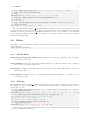
>>> slog = pmlab.log.Log(cases=log.get_cases()+nlog.get_cases())
>>> slog.get_cases()
[[’A’, ’B’], [’C’, ’D’], [’S’, ’B’, ’E’], [’C’]]
>>> slog.get_cases()[0][0] = ’Z’
>>> slog.get_cases()
[[’Z’, ’B’], [’C’, ’D’], [’S’, ’B’, ’E’], [’C’]]
>>> log.get_cases()
[[’Z’, ’B’], [’C’, ’D’]]
In this case, the modification of the merged log entails the modification of one of the component logs.
For the particular operation of merging, the log class overrides the sum operator that performs a deep
copy of the cases:
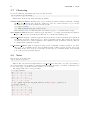
>>> alog = log + nlog
>>> alog.get_cases()
[[’A’, ’B’], [’C’, ’D’], [’S’, ’B’, ’E’], [’C’]]
A final word of warning: the current implementation tries to save as much as possible writing temporal
files for the applications that work with files. This means that if a log is loaded from a file and no
modification is performed, then the original file is used instead of writing a temporal copy of it. All log
methods that modify the log keep track of that, however, it is not possible for the class to keep track
of the user manual modifications. The best approach is to generate a new log rather than performing
inplace changes.
To sum up. To perform manual changes follow these steps (in that order):
1. Deep copy the (unique) cases to a variable.
2. Perform the desired modifications using all the power of Python syntax.