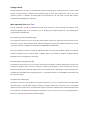
1
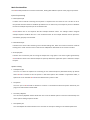
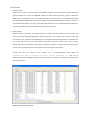
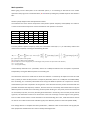
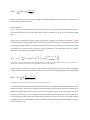
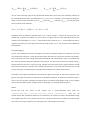
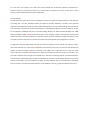
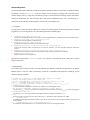
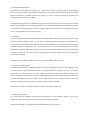
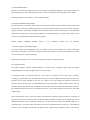
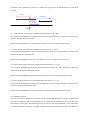
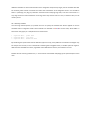
p ( Sl ) RE (l ) p ( Sl )·log 2 S f (S ) Relative entropy (Schneider, Stormo et al. 1986; Erill and O'Neill 2009) is also computed by XFITOM and can be used in different ranking methods. Ranking methods R sequence tells us how much information our motif conveys, but it does not provide answers to how well a particular sequence fits in the motif profile, which is what is required to scan for and rank putative binding sites. Several ranking methods have been proposed with diverse degrees of theoretical justification. XFITOM provides two basic scoring methods that can be used to rank putative binding sites. The sequence information content (R i ) (Schneider 1997) is a method derived from the information content (R sequence ) formula that scores each position of a particular site (j) based on ratio of frequency in the motif with respect to genomic frequency for the particular base observed in the site: p( S l j ) 1 / N Ri I j (l ) f ( S )·(log 2 f ( S ) log 2 S 1 4 / N (1/N)/(1+4/N) is the zero‐frequency correction following Laplace Law of Succession to estimate the frequency of a base present in a sequence and not present in the collection. N is the number of sequences in the collection. Another proposed method is the Berg‐von Hippel Heterology Index (HI), based on the relative frequency of the observed base with respect to the dominant (consensus) base at each position (Berg and von Hippel 1987): L P (l ) 1 / N BvH HI ln cons l 1 P (lobs ) 1 / N 1/N is again a correction factor for bases with zero frequencies in the collection It has been shown that both methods compute, effectively, the same index (Erill and O'Neill 2009). As a result of their formulation, both ranking methods discard information from the other motif base frequencies. As explained in (O'Neill 2003), this can lead to erroneous scoring, where the same score may be given to little or heavily conserved positions since information about the redundancy of each position (the information from the rest of bases at that position discarded by both methods) is not used. To correct this, O’Neill proposed averaging this kind of methods with the know redundancy index of the collection (O'Neill 1989), so that the final score was given by: