1
INCANTO - 1.00 E
wings for dreams
Date
10/08/06
Page
8 / 34
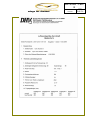
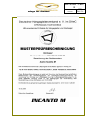
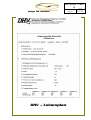
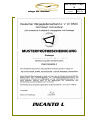
DHV Certification:
Following our philosophy to only build gliders with the highest safety, we design
our gliders to meet DHV strict and robust regulations. DHV is the most
respected worldwide certification agency and provides standards for the
classification of gliders with specific in-flight behaviours. This allows pilots to
find optimum gliders commensurate with their level of training, experience and
skill.
INCANTO 1-2 certification is valid using any harness which is categorized "GH".
The vast majority of harnesses produced after 1993 will be category "GH".
"GX" and other special single purpose harnesses are not recommended
because of the cross-braced strapping which detracts from the ability to steer by
weight shifting. These harnesses were once popular due to isolating the pilot
from feeling turbulence, but it has long since been discovered that feeling the
gliders reaction in turbulence is important for pilot awareness and the ability to
provide corrective input. To find out which class of harness your harness
belongs to, check the certification sticker or ask its manufacturer.
III. Using your INCANTO:
Ground Handling:
We highly recommend several hours of ground handling with the INCANTO to
thoroughly familiarize yourself with its launch behaviour, prior to your first
mountain flights. Ground handling is the best way to improve your safety in this
sport. If you practice two hours on the ground for every hour on the mountain, you
will quickly become masterful at launching in a variety of wind strengths and
conditions. Ground handling or "kiting" can become great fun as a sport on its
own, and will improve your overall enjoyment of flying by making your launches
easier. You will become more skilled, confident and relaxed and therefore be able
to enjoy more controlled launches and the sensations of flight without fear. It will
also teach you arms muscle-motor-memory skills to react and absorb turbulence.
This keeps the glider flying over your head and maintains pressure in the sail,
preventing collapses in-flight. Always anticipate the possibility of becoming
inadvertently airborne, so make sure to wear a helmet and gloves. Be cautious in
strong winds exceeding 20 km/hr as the possibility of getting lifted or dragged
increases.