1
US 6,526,426 B1
5
6
Web site visitor’s country and language preferences in the
embedded Within Javascript code. The Javascript code is
server log 404.
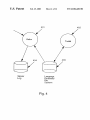
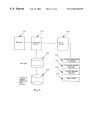
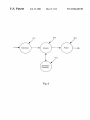
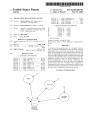
Atoolkit 402 is provided Which allows a master site to be
embedded Within the HTML stream that is sent back to the
server. The HTML “body” tag has an optional attribute
Where Javascript code can be inserted after the tag. The
informational text contained Within the Javascript code is in
built that is language and country-independent. The actual
language content is placed in a language and country data
base and/or ?le system 403 Where it is easily managed and
english and enclosed Within the appropriate system tags
described beloW, enabling it to be replaced With its transla
maintained. When a visitor enters the site, the requested
document is automatically served in the visitor’s language
and for the visitor’s country by ?lling in a document
template from the master site With the correct language and
10
country content from one or more databases.
This structure makes the site more compact, reduces site
resource requirements and loWers the cost of operating the
site.
The cost of making a design change is also reduced as
only the master site needs to be updated. This is in contrast
to the more time-consuming and expensive approach of
tion in the most recently valid language of the visitor. The
informational text has been pretranslated into all of the
languages in the system database for the customer. This
alloWs easy access to the appropriate translation for the
informational text based on the most recently valid language
for the visitor’s country and language.
15
This alloWs a multilingual Web site to be built
incrementally, such that only a portion of the documents on
the site need be translated and documents not available in a
requested language Will be served in the next most appro
priate language for a Web site visitor.
propagating a single change throughout all language ver
This also gives the customer the option of translating only
sions of the site Which is unnecessary With the invention.
Keeping the translated content in a database 403 also
makes it extremely easy and cost-effective to add additional
a subset of the total content on the site. The Developer
module controls all aspects of content navigation and deliv
languages to the site. Adding a language simply involves
translating the appropriate content and creating neW entries
ery for the entire site so that a visitor Will alWays be served
in the database 403. The Developer module makes it unnec
essary to replicate the entire site for each neW language and
country as Would typically be the case.
The toolkit 402 offers the multilingual Web designer a
great deal of ?exibility. It alloWs a site to be built Which
content is actually available on the server. The visitor Will
in the most appropriate language, based on What language
25 never see an error message (i.e. a “404 -document not
found”) because the requested content is not available in the
visitors language.
Regions are mapped and organiZed according to the Web
combines content common to all languages With content that
site’s needs. For example, a multi-user server can have a
is speci?c to a particular language and country. For example,
company-Wide information Which needs to be served in all
separate region de?nition for each user’s site. The regions
?le organiZes the regions, countries, and languages that the
languages is easily combined With regional-speci?c infor
mation that may only be required in a single language.
user sets up a mapping, for example, one user can have
user is concerned With and is con?gured by the user. The
The invention provides special tags that are used to insert
language or country-speci?c content into an HTML docu
ment. The tags are: Multi-country server-side includes
information speci?c to Italy and another user can have
35
information that is just concerned With the European region
and is not concerned With Italy. This approach alloWs a
(MLSSI). MCSSI alloWs locale-speci?c elements of an
hierarchical region-based lookup scheme. Content is hier
archically stored as country and language independent ele
(MCSSI); and Multi-language server-side includes
HTML document to be dynamically included as a function
ments such that a one-to-many and many-to-one mapping
of the current region or country, While MLSSI alloWs
exists betWeen country and language. The advantage to this
localiZed elements of an HTML document to be included as
approach is that there is no content duplication; the user has
only as many ?les in the system as he has unique content.
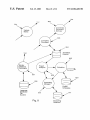
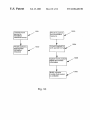
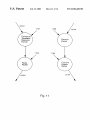
With respect to FIGS. 4 and 5, the toolkit 402 also features
a novel mechanism to create localiZed content for speci?c
a function of the current language.
The Developer module also supports the incremental
construction of a multilingual Web site through a feature that
makes it unnecessary to fully populate the site’s language
matrix completely With documents. If a requested document
45
approach to dynamically create documents tailored for a
speci?c language or country. This feature makes it easy to
does not exist (i.e., it has not been translated into the
requested language), the invention automatically retrieves
create a true global site localiZed for each area of the World
With the smallest achievable site footprint on the Web server
503.
the document in the next most appropriate language for the
visitor, or the default language of the document, as speci?ed
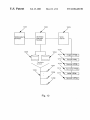
A template contains placeholders for country and
by the Web site manager. Documents can exist on separate
servers and/or databases.
The invention Walks doWn a priority list of languages for
a designated country. If a document in the language that is
?rst on the priority list is not present on the server, it then
looks for the next most appropriate language. The list is
sorted according to the most prevalent language or dialect
language-speci?c information that has been removed from a
document. This information is dynamically inserted from a
TermDB 508 (an external glossary), another template or
55
document located in a database or ?le system 509, or
provided automatically by the Developer module 502 When
the composite document is presented to the broWser 501.
The basic approach to creating a template has tWo steps.
First, remove as much country and language-speci?c infor
mation as possible from a document. Then, replace this
information With appropriate tags and commands speci?c to
the invention and described later in this document.
The advantage to using templates is that a single docu
ment can easily support many languages and countries. For
for a particular country. For example, the languages entries
for Egypt are {arabic, french, english, berber}. A visitor
from Egypt Will be presented With a requested document in
Arabic, if it is available. If it is not, the system Will look for
one in French, and so on.
When a visitor is presented With content in an alternate
language, an informational text message can be included
telling the visitor that the preferred language Was not avail
able. The informational text is supplied in the most recently
valid language for the visitor’s country and language and is
geographic regions or countries by using a template-based
65
example, a single form or CGI-generated document can be
constructed so that it Will be automatically localiZed for
different languages and locales. This signi?cantly reduces