1
NTP 3 (J)
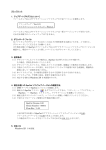
5. Originating Station Routing Indicator (OSRI):This
identifies the command originator by assigned AUTODIN or Fleet
routing indicator (FRI).
6. Station Sequence Number (SSN): Immediately follows
the OSRI and is a four digit number provided by outgoing message
handling personnel for message sequence identification. When
left blank, this number will be provided by GateGuard.
7. Julian Date (JD) and Time Of File (TOF): Follows a
space after SSN, consists of three digits for JD and four digits
for TOF. TOF should be the actual time the message is being
typed, sometimes the same as DTG. ZULU or Greenwich mean time
(GMT) shall be used in TOF.
8. Classification Redundancy: Follows
consisting of a four character code amplifying
classification and special handling designator
This is usually either four Us (unclassified),
Ss (secret), Ts (top secret), i.e. UUUU, CCCC,
a hyphen (-)
message
(SHD) if used.
Cs (confidential),
SSSS, TTTT.
9. Destination Station Routing Indicator (DSRI):
Follows two hyphens (--) and consists of a six or seven character
code identifying the station or system the message will be
delivered to upon receipt by Autodin. This DSRI usually ends
with “SUU” meaning that the PLA to RI lookup will be performed by
NAVCOMPARS or Message Conversion System (MCS) before it is
delivered to desired addressees.
10. The spaces ( ) and hyphen (-) are mandatory field
markers and F/L 2 always ends with a period (.).
503. PRECEDENCE ASSIGNMENT
a. There are four precedence categories authorized for use:
ROUTINE, PRIORITY, IMMEDIATE, and FLASH. The determination of
precedence is the drafter's responsibility; the releaser
confirms, or may change, the assignment. The importance of not
assigning a higher precedence than is necessary cannot be over
emphasized. The urgency of the subject matter must be considered
during the assignment of precedence. Importance does not imply
urgency.
b. Messages having both action and information addressees
may be assigned a single precedence, or they may be assigned dual
precedence. Dual precedence messages include one precedence for
all action addressees and a lower precedence for all information
addressees. The drafter should consider the urgency of subject
matter to both action and information addressees and make
individual precedence assignments accordingly. The assignment of
dual precedence is strongly encouraged and should be considered
for all messages with information addressees when other than
ROUTINE precedence is assigned to action addressees.
5-2
ORIGINAL