1
3 Functional Description
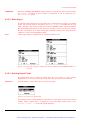
3.3.2 Word Recognition / Triggering stage
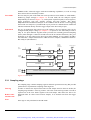
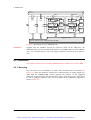
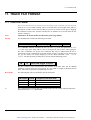
A central element of any logic analyzer is the ability to recognize events, i.e. a particular
signal pattern, in the target system so that the acquisition of event samples can stop at the
desired moment, i.e. the process referred to as "triggering". There are four full-width word
recognizers both for the VME part and the 64-bit P2 part of the VBT-325, and these form
the foundation not only for triggering, but also for store qualification (store filter) and
counting purposes. Counting can be used to delay the triggering process until a particular
number of bus cycles occur, and it is also used for statistical purposes. Thus, the three main
purposes of the word recognizers are:
•
Triggering
•
Store qualification
•
Occurrence counting
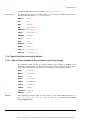
Busses, groups
Any signal or signal group can be included with a particular value or as "don't care" in the
word recognizers. Signals from the target bus may be included in the word recognizers as
a bus (like address and data), they may be combined into groups, like the Size group for
VME, consisting of DS1*, DS0*, LWORD* and A01, or simply as individual signals.
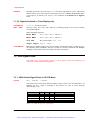
VME64
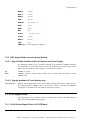
The VBT-325 fully supports 64-bit address and data as defined in the VMEbus
specifications, rev.D, which is used for the multiplexed block transfer modes MBLT. This
means that the 32-bit data bus D[31:0] and the 31-bit address bus A[31:1], plus the
LWORD* signal acting as data bit 32, can be treated as one 64-bit entity in the word
recognizers.
VME64 signal
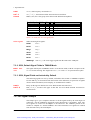
A special signal called VME64 is available in the word recognizers. This signal is
asserted when an AM-code for VME64 is detected, and can be used as part of an event
pattern.
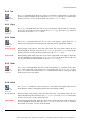
Negation
When multiple signals are combined into a bus or group, a "Not" (!) operator is available
in many cases, allowing the specified value to be treated as true if the condition does not
occur. This allows conditions like:
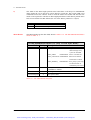
Data ≠ 0000 0000
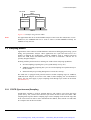
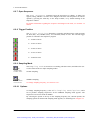
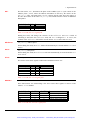
Range
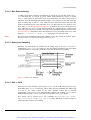
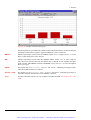
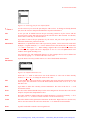
Each of the four word recognizers allows ranges to be specified on both the VMEbus
address and data, as well as for the VSB multiplexed address/data bus.
This allows functions like:
X ≤Address ≤
Outside range
Y
Outside range can also be obtained, by using the not operator on an address or data range.
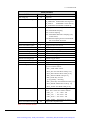
The hardware allows four 32-bit VME address ranges, four 32-bit VME data ranges and
four 32-bit VSB address or data ranges to be active simultaneously.
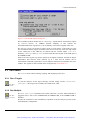
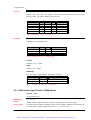
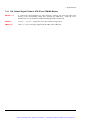
A64 range
28
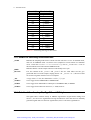
Alternatively, 64-bit address ranges (A64 according to VMEbus rev.D) can be specified in
each of the four word recognizers for the VMEbus part. (Since a 64-bit address is using
the 32 data lines, no data range can be used together with A64.)
User's Manual VBT-325
Artisan Technology Group - Quality Instrumentation ... Guaranteed | (888) 88-SOURCE | www.artisantg.com
VMETRO