1
88
Chapter 6
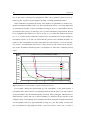
studied by initial experiments. According to the results that are obtained by averaging 150
readings for each point’s measurement, the accuracy results are within 0.2 mm. This is
achieved over a two meter length, however for real large scale metrology similar experiment should be repeated for larger size lengths, for instance 10 to 20m.
The result of measurement improves by increasing the number of transmitters – even if
for 5 or more transmitters, improvement showed to be negligible – and also controlling
the environmental effects like temperature gradients, vibrations or direct light. Also the
quality of the initial system setup is a fundamental aspect.
It is also shown that with the existing technology, iGPS may not be completely suitable
for dynamic measurements. However, by predicting the direction of movement and by using error compensation methods, this limitation may be resolved and iGPS could potentially be utilised for slow dynamic measurements.
MScMS and iGPS are compared, in order to highlight the pros and cons of each system, based on the experimental results and available information from the literature. In
measurement activities, MScMS and classical iGPS are similar; however, they present
many differences due to their different technological features. The technological differences affect several factors within the systems including system presetting, start-up and
measurement execution. It can be concluded that these systems can easily coexist, since
each system is suitable for specific applications due to their technological features. The
metrological performance of iGPS is superior compared to MScMS, however, the overall
cost of MScMS is more attractive in applications that do not require a higher level of accuracy. Both of these systems are lightweight, easily adaptable to different working environments, and can be rapidly installed and used. Prior to performing measurements, constellation devices are freely distributed around the area of work, and semi-automatically
located in a few minutes.
Future work includes detailed experiments in order to more accurately characterise the
advantages and weaknesses of the two systems. This will be done by designing several
experiments that can be performed with the two systems under similar, controlled laboratory conditions.
Regarding the iGPS, a future research will deal with detailed analysis of the effects of
the reference bar length used for the initial setup on measurement performance. This
should lead to finding an optimal length of reference bar for bundle adjustment, to minimise the error in the transmitters’ location. Also more detailed experiments will be done