1
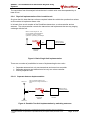
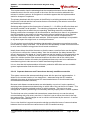
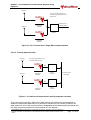
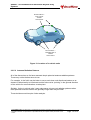
APU007: An Introduction to Automotive Keyless Entry Systems The conclusion from this analysis is that the two in-vehicle units must be separated by at least 20 cm. 2.2.4 Physical Implementation of the in-vehicle unit So given that it is clear that two units are required inside the vehicle the question then arises as to how best to implement those units. In its basic form a unit consists of the DecaWave transceiver, a microcontroller and an antenna. The microcontroller controls the transceiver and implements the two way ranging exchange with the fob. Basic in-vehicle single unit. The micro provides measured distance information to other in-vehicle systems for processing and analysis Distance Info to in-vehicle systems SPI Antenna Microcontroller DecaWave Transceiver DW1000 Figure 8: Basic Single Unit Implementation There are a number of possibilities in terms of implementing the two units: Separate antennas but only one transceiver and one micro-controller Separate antennas and transceivers but only one micro-controller Entirely separate units 2.2.4.1 Separate Antenna Implementation Antenna 1 Two unit system based on two antennas, and a single transceiver + micro Distance Info to in-vehicle systems SPI DecaWave Transceiver DW1000 Microcontroller Antenna 2 Figure 9: Possible Two-Unit Implementation by switching antennas © DecaWave 2013 This document is confidential and contains information which is proprietary to DecaWave Limited. No reproduction is permitted without prior express written permission of the author Page 9 of 16