1
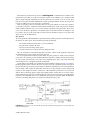
and the applied voltage pulse. In this way, pulse voltage can be slowly increased to explore expanded
regions of device operation safely. It will also curb transients.
Extending the Data Range
An important aspect of pulsed testing is that a wider range of data points can be tested. Beyond a certain
range of terminal potentials or power, damage can be done to a device because of excessive temperature
or current density. As the DUT temperature is a function of the time for which a given power level is
applied, the shorter a pulse, the greater the voltage and/or instantaneous power that can be applied.
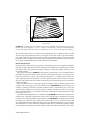
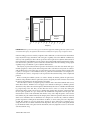
The conventional SOA of a device is that part of the I/V-plane for which the device can withstand
static or continuous application of those voltage levels. Pulsed testing then extends this region, in
particular to regions that are outside the static SOA, but are still encountered during normal RF operation
of the device. This gives an extended range of data for use in modeling device operation, not only for
isodynamic I/V characteristics, but also for RF parameters for extraction of parasitic resistances and
capacitances. With a pulsed S-parameter system coupled with a pulsed-I/V system, the voltage pulses can
take the DUT to an isothermal point outside the static SOA, where S-parameters can then be measured
during this pulse.
Repetition
The characteristics of a device can change due to the manner in which it is used. For example, an excursion
into a breakdown region can alter, although not damage, a device, permanently modifying its characteristics. To investigate such phenomena, an I/V-grid can be measured before and after such an excursion.
Changes in the device characteristics can then be observed in the difference between the measurements.7
Of use in such investigations is the ability to specify an arbitrary list of pulse points. In this case, the
list of points in the I/V-plane to be pulsed to would first list the regular grid, then the points of breakdown
excursion, and then repeat the same regular grid points. Additionally, scripting capabilities might be used
to create a series of such measurements.
Onion-Ring Destructive Testing
Often it is desired to test a device until destruction. An example of this might be breakdown measurements. Sometimes it is difficult not to destroy a fragile device during testing — especially devices fabricated
with an immature technology. In either case, it is desirable to structure the sequence of pulse points from
safe voltage and power levels to increasing levels up to destruction. It is essential in this that all data up
to the point of device destruction is preserved.
Here again, scripting capabilities and the use of a list of pulse points allow measurements to be
structured as a series of layers of pulse points, increasing in power and/or voltage level. In this way, the
characteristics of a device can be explored as an extension, in layers, of the safe device operation or
constant power level. Inter-pulse averaging and a waiting period for device stabilization would not
normally be used in this form of measurement.
Quiescent Measurement
It is important to measure the bias point representing the isodynamic conditions of the DUT. This is the
terminal voltage and current before each pulse and as such gives the quiescent thermal and trapping state
of the device. This needs to be measured as part of the pulse exercise if the pulse sequence used is such
that the average device temperature is raised.
The time spent at the quiescent point is usually quite long, affording opportunity for considerable
averaging. Additionally, when pulsing too many points of the I/V-plane, the quiescent point can be
measured many times. Thus, a comparatively noise-free measurement can be obtained.
Sample points for quiescent data would usually be placed immediately before a pulse. Several samples
would be taken and averaged. It is assumed that the relaxation time at the quiescent condition, since the
previous pulse, is very much greater than all relevant dispersion-effect time constants (unless these time
constants are themselves being investigated). This is necessary if the samples are to be considered as
representing a bias condition, rather than a transient condition.
©2001 CRC Press LLC