1
still have to be prepared routinely. These non-productive runs increase average cost and reduce
growth yield. Moreover, processing specifications of many devices are tightened because
Stricter tolerance of certain critical parameters can significantly impact the cost of producing
high-performance, low cost modules and circuits. This calls for automating the MBE growth
process to improve wafer to wafer processing repeatability, reduce run-time by eliminating error
prone process to produce devices on a large scale without compromising on the quality of the
device structures grown.
Unattended automation can be achieved by designing a control system that monitors the
growth in real-time and compares it with the data available from the previous growth. The
difference between the real-time data and ideal data can be calculated and feedback to the control
system and the growth parameters can be adjusted in real-time, thereby achieving accurate
device structures. The variables that strongly effect the layer growth are the substrate
temperature and flux emitting from the individual source materials. In the MBE reactor, it is not
possible to rapidly change the diffusion (by controlling surface temperature) over the time period
of typical 5-10 monolayer growth because of the slow thermal dynamics of the substrate. Hence,
substrate temperature is useful as a "run-to-run" control variable. Flux on the other hand can be
rapidly changed by adjusting the effusion cell shutters, and more slowly changed by controlling
the cell temperature. Hence, flux is the effective control variable. A change in flux will effect the
deposition time to achieve a desired coverage, i.e., decreasing flux increases the deposition time
to reach a coverage goal and vice versa.
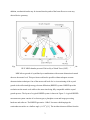
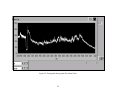
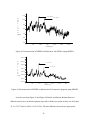
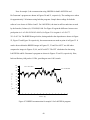
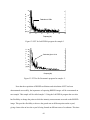
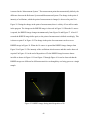
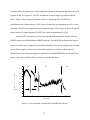
Growth conditions can be monitored in real-time with the help of RHEED data, since the
period of one RHEED oscillation corresponds exactly to the growth of one monolayer of atoms
of the semiconductor material [12]. These RHEED oscillation patterns can be observed from
5