1
Legacy documentation
refer to the Altium Wiki for current information
An Introduction to Embedded Intelligence
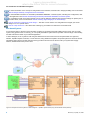
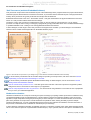
electronic circuit that implements the function required. A 'soft' processor in the FPGA design accesses these hardware
functions through use of an Application-Specific Processor (ASP).
Figure 8. The ASP component interfaces between the code running on the processor and the functions implemented in the FPGA fabric.
For a tutorial that explores the use of hardware acceleration in an FPGA design, refer to the document TU0130 Getting
Started with the C-to-Hardware Compiler.
For detailed reference information on the C-to-Hardware Compiler, refer to the document GU0122 C-to-Hardware Compiler
User Manual.
For information on the ASP component, refer to the document CR0177 WB_ASP Configurable Application Specific
Processor.
Debugging
Debugging is the act of testing you hardware design and any embedded software (running on 'soft' processors therein), to
obtain the desired (correct) performance and functionality. Debugging is an important element of the overall design strategy,
and effective debugging can save a lot of time and money when it comes time to deploy your end design in the field.
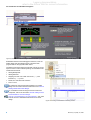
In Altium Designer, debugging of hardware is provided courtesy of 'virtual' instruments – components which are 'wired' into the
actual FPGA design but which, on programming the physical device, offer software-based controls for interrogation and control
of nodes within the design. Imagine being able to jump inside the physical FPGA device, armed with an oscilloscope, multimeter
and logic analyzer, and you'll have some idea of what these instruments can offer as part of a 'live' debugging environment.
GU0123 (v1.0) May 19, 2008
7