1
For lights, stereos, TVs, and other devices we encounter in daily life, any sort of novel interface is likely to fail,
simply because the benefits offered by smart control are unlikely to be compensate for the fuss of learning to use the
interface, especially when existing familiar interfaces are adequate for most purposes. Indeed, one might make the
strong conjecture that the only way to improve an ordinary familiar environment is to eliminate the interface altogether.
Such an invisible interface is found in BMW (and perhaps other) automobiles. Vehicles have a memory for the
configuration of the driver’s seat, the steering wheel, and the outside mirrors. Three distinct memory settings are
available, allowing for a customized configuration for up to three different drivers. A naive interface might require
the drivers to identify themselves each time they entered the vehicle in order for the correct configuration to be chosen. Instead, the interface is hidden from the user by associating a different memory with each car key, and inserting
the key in the ignition or pressing the remote entry button selects the memory configuration associated with the key.
Another example of an invisible interface is the Internet Chair (Cohen, 2003). The chair senses the direction that
users are facing, and adjusts the soundscape presentation appropriately so as to achieve orientation invariance: users
hear the same binaural sound regardless of the direction they are facing, as if they were wearing headphones. The
chair is noninvasive and does not require explicit user actions (such as pointing) or complex technology (such as
computer vision).
12.1 THE ADAPTIVE HOUSE
During the past eight years, we have proposed and implemented a smart home environment premised on the notion
that there should be no user interface beyond the sort of controls one ordinarily finds in a home—no touch pads, no
speech input, no gaze tracking or hand gesturing, etc. The intelligence of the home arises from the home’s ability to
predict the behavior and needs of the inhabitants by having observed them over a period of time. We have focused on
home comfort systems, specifically air temperature regulation, water temperature regulation, and lighting. Instead of
being programmed to perform certain actions, the house essentially programs itself by monitoring the environment
and sensing actions performed by the inhabitants (e.g., turning lights on and off, adjusting the thermostat), observing
the occupancy and behavior patterns of the inhabitants, and learning to predict future states of the house. To the extent
that the inhabitants’ needs can be anticipated, the inhabitants are freed from manually controlling the environment via
some type of interface. When the predictions are incorrect, the inhabitants can simply indicate their preferences via
ordinary interfaces they are used to, e.g., light switches, thermostats, and simply turning on the hot water.
Scenarios in the home include the following: On a rainy weekday when the inhabitant leaves the home at 8 a.m.
and on the previous three days had returned by 7 p.m., the home predicts a return by 6:30 and runs the furnace in
order to achieve a setpoint temperature by that time. When the inhabitant does return, he prepares dinner and banks of
lights in the kitchen and great room are turned on full intensity. The inhabitant then relaxes on a couch and watches
TV in the great room; lights are turned off behind the TV and are dimmed elsewhere in the room. On a weekend when
the inhabitant leaves the house at 4 p.m., his return is not anticipated until past midnight, and the house is not heated
before then. When the inhabitant does return home at 1 a.m., the prediction is made that only the master bedroom will
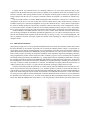
FIGURE 1. Examples of two lighting controls for residences.