1
Chapter 1
Introduction
Total-energy calculations and molecular dynamics simulations employing densityfunctional theory [1] represent a reliable tool in condensed matter physics, material
science, chemical physics and physical chemistry. A large variety of applications
in systems as dierent as molecules [2, 3], bulk materials [4, 5, 6, 7] and surfaces [8, 9, 10, 11, 12] have proven the power of these methods in analyzing as
well as in predicting equilibrium and non-equilibrium properties. Ab initio molecular dynamics simulations enable the analysis of the atomic motion and allow the
accurate calculation of thermodynamic properties such as the free energy, diusion
constants and melting temperatures of materials.
The package fhi98md described in this paper is especially designed to investigate the material properties of large systems. It is based on an iterative
approach to obtain the electronic ground state. Norm-conserving pseudopotentials [13, 14, 15, 16] in the fully separable form of Kleinman and Bylander [17]
are used to describe the potential of the nuclei and core electrons acting on
the valence electrons. Exchange and correlation are described by either the
local-density approximation [18, 19] or various generalized gradient approximations [20, 21, 22, 23, 24]. The equations of motion of the nuclei are integrated
using standard schemes in molecular dynamics. Optionally, an ecient structure
optimization can be performed by a damped dynamics scheme.
The package fhi98md is based on a previous version fhi96md [25]. The new
version, however, is based on FORTRAN90 and allows dynamic memory allocation. Furthermore, the choice of available gradient-corrected functionals has
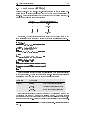
been increased. The package consists of the program fhi98md and a start utility fhi98start. The program fhi98md can be used to perform static total energy
calculation or ab initio molecular dynamics simulations. The utility fhi98start
assists in generating the input le required to run fhi98md, thereby ensuring the
lowest possible memory demand for each individual run. Thus no recompilations are
required; a full calculation can be performed by calling the two binary executables
fhi98start and fhi98md in sequence.
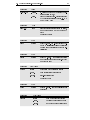
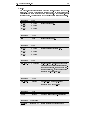
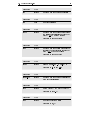
This manual consists of two parts. The rst part is a reference list to look up
the function of input parameters, which are described in alphabetical order. The
second part describes typical procedures of how one might use the code. Here
we describe the parameters in their functional context. Also, the way in which the
input parameters control the algorithms used in the code is described in more detail.
Finally, we provide examples of how to use the code to solve a particular physical
problem.
1