1
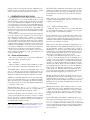
The following is an example of the clear and terse warning emitted in the case where the tool detects the initialisation of a static
field on line 15 of a class called Test.java:
Currently, the following constructs emit completeness warnings
in the Warning User Mode: Large Numbers, Reflection and Bitwise
Operators.
This set of constructs has been chosen for Warning User Mode as
they are relatively easy to detect while not occurring so frequently
that the warnings provided to the user would be overwhelming.
The following is an example of the clear and terse warning emitted where the tool detects the use of the left shift bitwise operator
on line 87 of a class called Bitwise.java:
Test.java:15 Warning: ESC/Java2 does not
perform extended static checking of static
initialisers.
static int a = 1;
^
3.2.2
Bitwise.java:87: Warning: The semantics
of the left shift operator is incomplete.
Verbose Warning Mode
The additional constructs in this mode are: Loops, Object Invariants and Arithmetic Overflow.
As it is a verbose mode, the warning messages emitted also give
extra information to the user. This includes an extended explanation of the unsoundness and a pointer towards a source of more
information including a direct citation to the relevant documentation.
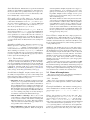
An example of a warning in this user mode is where the tool
detects the a loop on line 36 of a class called Loop.java is:
int_a << 2;
^
3.3.2
Verbose Warning Mode
The constructs for which warnings are emitted in this mode are:
Floating-Point Numbers, Strings and Arithmetic Overflow.
The last warning to be given in Warning User Mode is to remind
the user of the inherent incompleteness of Simplify. This warning
states:
The theorem prover used by ESC/Java2,
Simplify, is necessarily incomplete.
This is due to the undecidability and
semi-decidability of some of the underlying theories used by Simplify.
Loop.java:36: Warning: ESC/Java2 does not
consider all possible execution paths
through a loop.
for(int i=0, i<n; i++){
^
This is unsound.
Note that the warning message is parameterisable across prover
names.
As with the soundness warnings, extra information is given to
the user in Verbose Warning Mode. An example of such a warning
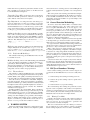
is where the tool detects the use of floating-point numbers on line
64 of a class called Decimals.java is:
To make ESC/Java2 consider more
iterations, use the -loop option.
Decimals.java:64: Warning: The semantics
of floating-point operations are
incomplete.
It considers only those that execute at
most one complete iteration, plus testing
the guard before the second iteration.
More information can be found in Section
2.4.3 and Appendix C.0.1 of the ESC/Java2
User Manual.
double d = 1.0 + 2.0;
^
They are not strong enough to prove
1.0 + 1.0 == 2.0 or even 1.0 != 2.0.
This kind of warning behaviour, one that directly cites relevant
detailed documentation, is inspired by Eiffel Software’s EiffelStudio IDE which cites relevant sections of Meyers’s “Eiffel the Language” and “Object-Oriented Software Construction” texts.
3.2.3
For more information, please see Appendix
C.1.1 of the ESC/Java2 User Manual.
3.3.3
Unimplemented Constructs
Finally, there are some constructs that do not yet emit soundness
warnings. These are: Ignored Exceptional Conditions, Constructor
Leaking, Initialisation of Fields Declared non_null, Class paths
with .spec files and Shared Variables.
These constructs are an open problem, in part because we must
start relying upon more than just syntactic and lightweight semantic
information (i.e., types) to reason about them. It may be necessary
to do first-order reasoning to detect some of these scenarios.
3.3
4.
FUTURE WORK
The most obvious piece of further work to be carried out is the
extension of the soundness and completeness warning system to
cover more scenarios.
The extensions presented in this paper are ones that should be
enabled by default in ESC/Java2. At present, it is only an option
that can be switched on. Users that are aware of the myriad of
options available in ESC/Java2 are those that are experienced in
using the tool. These programmers are probably well-aware of the
soundness and completeness issues with the tool. So how do we
make the tool more user friendly, especially for beginners, without
inundating them with excessive feedback?
ESC/Java2 Completeness Warnings
In the completeness warning system, the same three categories
apply for constructs about which ESC/Java2’s reasoning is incomplete.
3.3.1
Unimplemented Constructs
Finally, there are some constructs that do not yet emit completeness warnings. These are Type Disjointness and Modular Checking.
Warning User Mode
23