1
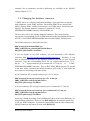
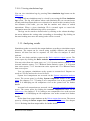
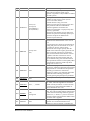
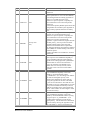
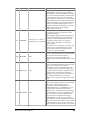
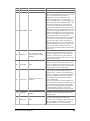
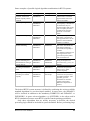
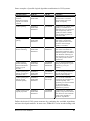
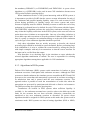
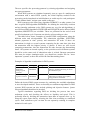
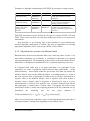
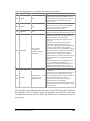
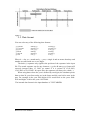
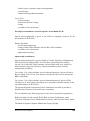
Some examples of possible logical algorithm combinations in RTGS systems:
RTGS description
1. No queuing facility
available, transactions
without liquidity remain
unsettled
2. FIFO queuing
Main alg.
ENBASIC1
ENDRTGS1
Sub-alg.
ENBASIC1
ENDRTGS1
SEBASIC1
QUFIFOPR
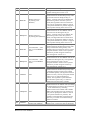
3. Bypass FIFO queuing
ENBASIC1
ENDRTGS1
SEBASIC1
QUBYPAFI
4. FIFO queuing and
bilateral offsetting
ENBASIC1
ENDRTGS1
SEBASIC1
QUFIFOPR
BOBASIC1
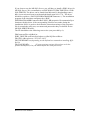
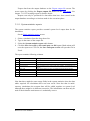
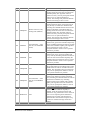
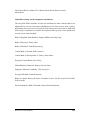
5. FIFO queuing,
bilateral offsetting and
full multilateral netting at
a given interval
6. Queuing and splitting
according to maximum
value
ENBASIC1
ENDRTGS1
SEBASIC1
QUFIFOPR
BOBASIC1
MNSETTLI
ENBASIC1
ENDRTGS1
SEBASIC1
QUFIFOPR
SPMVALU1
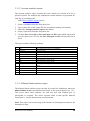
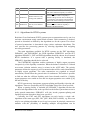
7. Queuing and splitting
according to available
liquidity
ENBASIC1
ENDRTGS1
SEBASIC1
QUFIFOPR
SPAVLIQ1
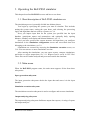
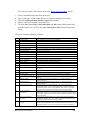
Comments
Can be used with "credit
without limits" to find the
"upper bound" and "lower
bound" of liquidity.
Transactions are queued
when liquidity is insufficient
for settlement; they are
released in FIFO and priority
order as liquidity becomes
available from incoming
payments or extended
credits.
Same as 2, except that the
FIFO order is bypassed to
settle payments lower in the
queue for which sufficient
liquidity is available.
Transactions are queued in
FIFO order and settled also
with bilateral offsetting
when sufficient liquidity is
available.
Note: Bilateral offsetting can
cause bypasses in strict
system level priority FIFO
order of transactions.
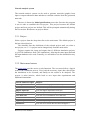
As in 4, plus full multilateral
netting is attempted at a
given interval (e.g. every 10
minutes).
As in 2, but large
transactions are split into
smaller ones to better
circulate liquidity.
As in 2, but all unsettlable
transactions are split based
on available liquidity. This
algorithm gives the
benchmark for maximal
liquidity employment
(difficult to implement in
practice).
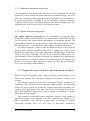
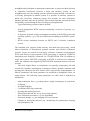
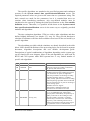
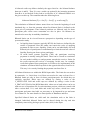
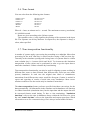
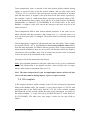
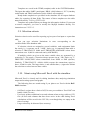
The desired RTGS system structure is defined by combining the various available
standard algorithms or user-developed modules. In most cases, the SEBASIC1
will be invoked in addition to the mandatory ENDRTGS1 and ENBASIC1 or
ENFORURG. A queue release algorithm, e.g. QUFIFOPR, is also often used in
RTGS simulations because most RTGS systems contain queuing possibilities.
Only those algorithms that are strictly necessary to describe the desired
processing logic should be included in system definition. Before performing large
BoF-PSS2 User Manual
95