1
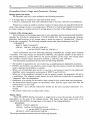
Stack Usage and Parameter Passing
-
-
-
29
The number of output values is limited by the size of the stack of the calling routine.
When the list of identifiers does not fit on one line, a convention is used for the
additional identifiers: extra, consecutive occurrences of OUTPUT: .
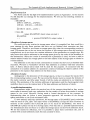
Any parameter can occur any number of times in the list of identifiers, as in the following
example:
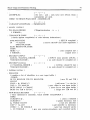
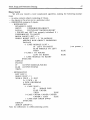
?DUP
INPUT: VAL.ON.STACK
VAL.ON.STACK
IF OUTPUT: VAL.ON.STACK,VAL.ON.STACK
( leave number twice on the stack)
ELSE OUTPUT: VAL.ON.STACK
( leave number once on the stack)
THEN; .
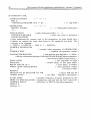
A routine may only "output" its own parameters; that is, identifiers occurring in the list
following OUTPUT: also have to occur in a list following INPUT: or LOCAL: .
No occurrence of OUTPUT: means that the called routine does not want to leave output
values on the stack of the calling routine. This implies that there are no other ways to
leave output values on the stack of the calling routine than through the use of
OUTPUT:
The OUTPUT:-statement should be the last executed statement of a routine.
Stack notation:
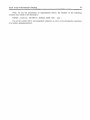
We can use the lists of identifiers following INPUT: and OUTPUT: to describe the net
effects on the stack of the calling routine caused by the execution of the called routine. The
net effects of the routine EXAMPLE can be described as:
( INPUTl,INPUT2 -> OUT1,OUT2,OUT3,OUT4 )
Summary:
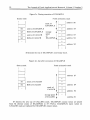
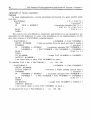
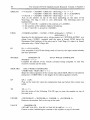
Assume that the routine CALLER uses EXAMPLE. The following diagram shows the
stacks and storage spaces of CALLER and EXAMPLE when EXAMPLE is executing:
EXAMPLE
r--------------------.\r
stack
transfer
\
stack
storage space
scratch values
CALLER
V
-
OUTPUT:
INPUT:
input values
f---
OUTPUT:
Figure 1.
For the sake of clarity, we have used OUTPUT: separately for the transfer of input and
scratch values, but they can be left on CALLER's stack using one occurrence of OUTPUT:.
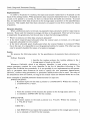
Note that INPUT: and OUTPUT: transfer their values only once. INPUT: transfers its
values when the execution of EXAMPLE starts, and OUTPUT: transfers its values just
before the execution of EXAMPLE stops. The transfer of values between EXAMPLE's
storage space and stack can happen any number of times during the execution of EXAMPLE.