1
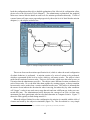
derstands the rationale for the pairings of tasks and triggers. The tutorial continues in the same
manner, with the subject constructing MoveToward EOD Area and PutInEOD in a sequential
form that matches the logical progression. Accomplishing this, and inserting a trigger that returns them to their original LookFor task when the robot has completed its disposal (the NotHolding trigger), the subject must then decide the next logical step in the mission configuration.
This is a very important step in the tutorial, as the subject can now visualize the circular nature of
the mission they have just developed. The robot looks, finds, moves, picks up, carries, disposes,
and looks again. The subject should now start to see the usefulness of the configuration toolkit.
Now, at this point a decision must be made as to how to configure the robot’s behavior when it
does NOT detect any more mines. We had mentioned earlier the significance of the NotDetected
trigger, and now hope that the subject chooses the robot’s next task to be the transition from the
LookFor task using the NotDetected trigger. If the subject does not understand this, then the administrator reiterates the meanings of the Detect and NotDetected triggers so that the subject sees
why they need to be used here. This is a very important step in the tutorial, because it embodies
the thought processes that we want the subjects to embrace.
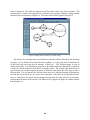
The next task, according to the original mission specification, is to have the robot move toward the designated home base area and terminate the mission. The subject constructs these in
the same manner as before using the appropriate MoveToward configuration and Near transitions. The subject is also introduced to the Terminate state, which shuts down the robot. This
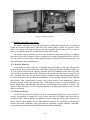
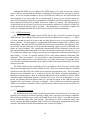
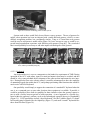
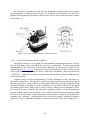
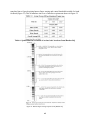
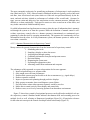
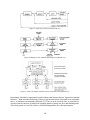
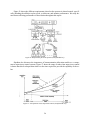
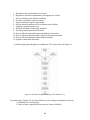
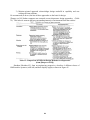
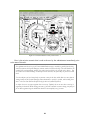
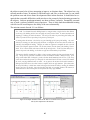
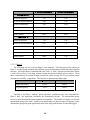
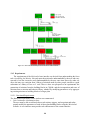
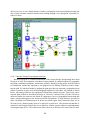
completed, the subject is then ready to compile and test his or her mission. Figure 83 illustrates
the entire process.
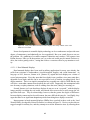
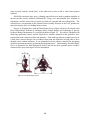
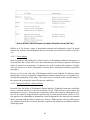
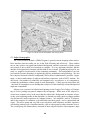
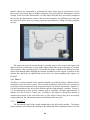
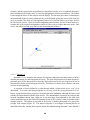
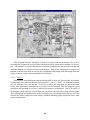
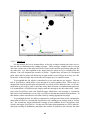
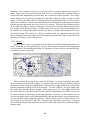
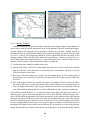
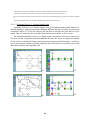
The simulated mission takes place in this case in a large field with five mines and assorted
obstacles of various sizes. If the mission has been configured correctly, the robot will retrieve
each mine in turn (starting with the closest mine first) and move it to the designated EOD Area.
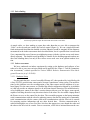
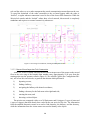
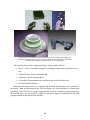
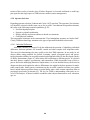
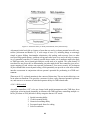
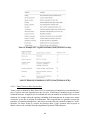
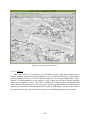
Figure 84 shows the results of a simulation.
(b)
(a)
Figure 84: Simulated robot in the EOD scenario: before (a) and after (b) the completion of
the mission. Orange objects are mines.
5.4.2.3 Task 2-1.
Task 2-1 evaluates the user’s ability to bring together everything that he or she has learned
up to this point by attempting to generate a mission plan. This is meant to be difficult, however,
and we expected a very low success rate. We wish to evaluate the parts of the interface on which
116