1
IN PROCESS
Invensys Buys Spiral Software
U.K. petroleum software specialist increases IOM’s footprint in refining sector.
Invensys Operations Management
(IOM, http://iom.invensys.com) has
acquired Spiral Software (www.spiralsoft.com), a privately held company
headquartered in Cambridge, U.K.
Founded in 1998, Spiral Software provides integrated solutions ranging from
crude assay management to refinery
supply chain optimization, enabling clients to make the best possible choices
in trading and refining crude oil. Spiral’s crude oil knowledge management
tools help companies track the quality
of feedstocks and predict their refining
behavior. Fully integrated refinery planning and scheduling help optimize production plans based on real-time crude
demand and market pricing, as well as
the refinery’s own capacity and supply
chain constraints.
“This acquisition complements our
existing refinery-wide optimization
strategy and leverages our SimSci-Esscor modeling and optimization offerings for the hydrocarbon processing industry,” said Ravi Gopinath, president
of IOM’s software business. “Spiral
Software provides the only integrated
refining-industry solution designed
from the ground up, bringing together
feedstock data management, planning
and scheduling. This means that our
SimSci-Esscor offerings will now fully
support and optimize the entire refining value chain, from crude trading to
supply-chain distribution, including
lifecycle modeling from design to startup to performance optimization.”
“Combined with Invensys Operations Management’s existing refinery
optimization offerings, our capabilities
in feedstock data management and refinery supply chain optimization will
allow us to provide a unique, end-toend solution across the full oil sector
26
www.controlglobal.com N O V E M B E R / 2 0 1 2
have waned, and they convert their order books into revenues. However, suppliers still reported robust activity in
the key power, oil and gas, and mining
sectors. The order backlogs that suppliers have accumulated are still healthy,
indicating that growth should continue for the foreseeable future.
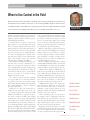
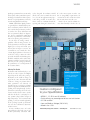
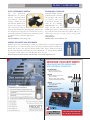
Ravi Gopinath, president of IOM’s software business; right: Matthew Webster,
CEO of Spiral Systems.
value chain,” said Matthew Webster,
chief executive officer, Spiral Software.
The business will continue to be
managed by Spiral Software’s existing
executive team, adding employees to
Invensys operations in the United Kingdom and North America. No financial
terms for the deal were announced.
Automation Market
Downshifts in 2Q 2012
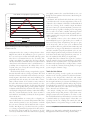
According to Allen Avery of ARC Advisory Group, after several quarters of
strong growth following the global recession, automation market expansion
has slowed decidedly. Whereas previous quarters saw double- and high single-digit growth rates, the second quarter of 2012 saw a paltry 2.7% growth in
supplier revenues.
While they continue to execute
many projects around the globe, suppliers cited several reasons for the more
modest growth. These include both
economic uncertainty in the United
States and Europe and a cooling down
of the once white-hot Chinese economy. New order activity also fell off
somewhat for some suppliers as the rebound effects from the global recession
Shale Gas Supports
Rosy Outlook for U.S.
Chemicals Industry
The expansion of the shale gas market
could potentially drive significant benefits to the U.S. chemicals industry, including decreased raw material and energy costs, according to a new report
by PwC U.S. titled, “Shale Gas: Reshaping the U.S. Chemicals Industry.”
In fact, another recent PwC report estimated that the potential impact of shale
gas on U.S. manufacturing could enable U.S. manufacturers to lower their
raw materials and energy costs as much
as $11.6 billion annually by 2025.
Before natural gas from shale can
be transported efficiently and sold
commercially, impurities must be extracted. The byproducts of this process,
known as natural gas liquids (NGL),
include hydrocarbons such as ethane,
butane and propane. The chemical industry uses NGL’s to produce a variety
of derivative products that ultimately
become raw materials for multiple
manufacturing sectors. In the case of
ethane, they convert it to ethylene—
the most significant single chemical in
terms of volume and value—and then a
range of downstream products. A sampling of manufacturing sectors that ultimately benefit from greater capacity
and more attractive pricing of NGLs