1
Hardware and equipment
Card readers and access cards
Card readers
By card reader, we mean any of the different types of credential
reader supported by the CRC. A card reader scans a card to
determine the card number and passes the card number to the
CRC.
All the required electronics are assembled in the card reader
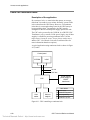
housing. The card reader connects directly to the CRC, which
processes the card number and grants or denies access.
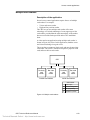
Each CRC can support several card readers. Typically, a CRC
will control an entry and exit card reader for the doorway. It can
also support multiple readers for such applications as two-person
rule or anti-passback.
Note that the CRC supports any type of reader that uses the
industry standard Wiegand output format. These include:
•
•
•
•
•
Proximity
Wiegand pin
Magnetic stripe
Keypad
Smart card
Some applications work best with card readers that support dual
LED control. The CRC uses two LEDs, or two LED states, to
indicate that further actions are required after the initial badging
operation, before access is granted. These applications are:
•
•
•
Two-person rule
Visitor and escort
PIN schedule
If you plan one of these applications, contact the card reader
manufacturer to confirm that the reader supports dual LED
control.
Card readers are additionally categorized by the way the card
must be presented to the card reader for reading:
•
Card swipe: The card swipe reader does its reading as a card
is swiped through a slot in the reader.
•
Insert: The insert reader requires that the card be inserted
fully into a narrow slot, with the reading typically being
done as the card is withdrawn.
•
Proximity: The proximity reader requires the user to pass the
coded card in close proximity to the reader, with the reader
using RF energy to determine the code on the card.
CRC Technical Reference Manual
Technical Manuals Online! - http://www.tech-man.com
3.9