1
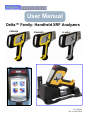
Delta Family Handheld XRF Analyzers
Radiation Safety: Common Questions & Answers
Question: When I’m shooting a piece of pipe or valve on a rack or on a table top, is there
any exposure to people standing several feet away from the analyzer?
Answer: Even a thin amount of a dense metal sample (three to four mm
thickness, not Al alloy) is enough to completely attenuate the emitted x-ray
beam. Shooting a piece of material that covers the sampling window on the
analyzer completely shields any bystanders from radiation exposure.
However, use good practice: Keep the area clear of people for at least four to
five feet in front of the analyzer.
Question: If I forget to lock the trigger, I pick up the analyzer and accidentally pull the
trigger, is that dangerous to nearby personnel?
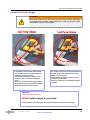
Answer: No, this example of misuse is not dangerous, but it may produce a
non-negligible radiation exposure to nearby personnel. For an exposure to occur,
the following things must happen.
First, you must be holding the analyzer so that a bystander is actually standing
in the x-ray beam being emitted. Just being near the analyzer is totally safe
otherwise.
Second, the bystander must be within one meter from the nose of the analyzer
to receive any appreciable dose. If all of these conditions are true, the dose
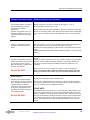
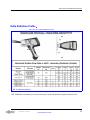
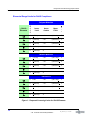
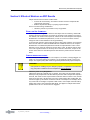
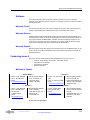
received by a bystander is still extremely low. Please see Misuse Example 3 in
the table above.
Third, it would require failure of the proximity hardware and software.
Question: Do I need to create restricted areas where I am using the analyzer?
Answer: No, provided you are following normal operating procedures there is no
reason to restrict access to an area where the analyzer is in use. However, the
operator should take precautions to keep any personnel more than three feet
away from the sampling window of the analyzer in the event of accidental
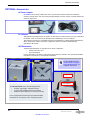
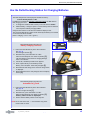
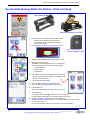
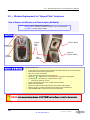
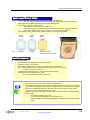
misuse as detailed above. Should operators also elect to test small samples as
shown on pages 34 and 35, they should also be sure that no personnel are
standing within about four to five feet of the sampling window.
Question: How does the x-ray tube in the Innov-X system compare to a radiography system used for taking images of metal parts?
Answer: The x-ray tube used in the Innov-X system produces between 1,000 and
10,000 times less power than most radiography systems (0.5-1 watt versus
multiple-kW). A portable XRF is designed to perform surface analysis of alloys
and other samples, whereas a radiography system is designed to shoot x-rays
entirely through metal components in order to obtain an image on the other side
of the test object. For example, many tube-based radiography systems use a
300-400 kV tube and currents in the tens or hundreds of milliamperes (mA). The
Delta uses a tube operating at a maximum of 40kV and typically 6 -10 μA.
The radiation levels produced by an Delta are thousands, or tens of thousands,
times lower than a radiography unit.
PN_103201 Rev_ A: May/2010
— Radiation Safety: Common Questions & Answers —
35