1
to the specified flows, so that they can be marked with the right DS value.
The next logical step is profiling. A traffic profile specifies the temporal properties of a traffic stream selected by a classifier. It provides rules for determining
whether a particular packet is in-profile or out-of-profile. For example, a traffic
profile based on a token bucket for traffic belonging to codepoint X is a pair (r, b)
indicating that all packets marked with codepoint X should be measured against
a token bucket meter with rate r and burst size b.
Packets of the traffic stream that arrive when no tokens are available are called
out-of-profile. Different conditioning actions may be applied to out-of-profile
packets. These packets may be queued until they become in-profile (shaping),
discarded (policing) marked with a new codepoint (re-marking) or forwarded
unchanged while triggering some accounting procedure.
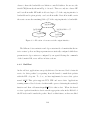
[rgb]0,0,0Packets
[rgb]0,0,0Classifier
[rgb]0,0,0Marker
[rgb]0,0,0Shaper/
[rgb]0,0,0Dropper
[rgb]0,0,0Meter
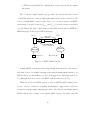
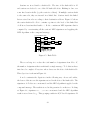
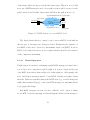
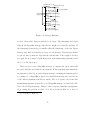
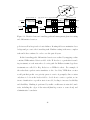
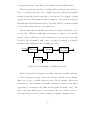
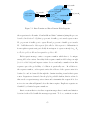
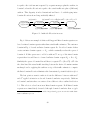
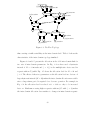
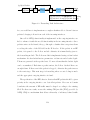
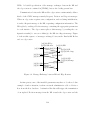
Figure 3.4: Block diagram of a Traffic Conditioner
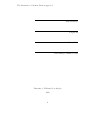
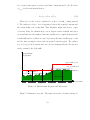
Figure 3.4 gives the block diagram of a traffic conditioner. A traffic conditioner
of a DS boundary node may contain the following elements: meter, marker,
shaper and dropper. A traffic stream is selected by the classifier, which steers
the packets to a logical instance of a traffic conditioner. A meter is used (where
appropriate) to measure the the traffic stream against the traffic profile. The
state of the meter with respect to a particular packet (e.g., whether it is in- or
out-of-profile) may be used to affect a marking, dropping or shaping action.
52