1
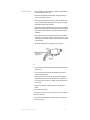
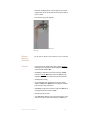
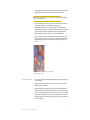
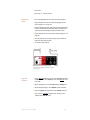
Ligature
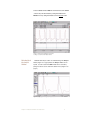
1 Scroll to the appropriate section of data.
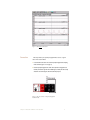
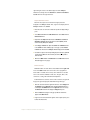
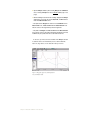
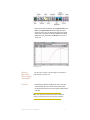
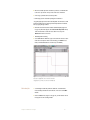
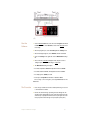
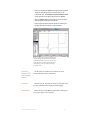
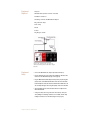
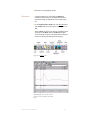
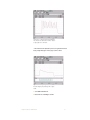
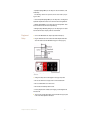
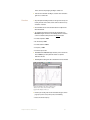
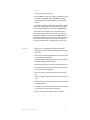
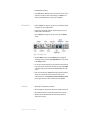
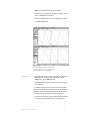
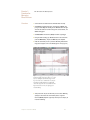
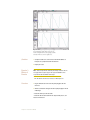
9 Click the 2-Cursor icon (Figure 4-26 on page 91), so that two blue vertical
lines appear over the Muscle channel on the Main window. Move the
cursors to positions on the recording window to measure the following
periods:
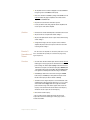
• The period of the ventricular contraction, which is time difference between
cursors placed on adjacent peaks of ventricular contractions. The period is
the value for T2-T1, displayed on the upper left side of the Main window
• The period of the atrial contraction, which is time difference between
cursors placed on adjacent peaks of atrial contractions. The period is the
value for T2-T1, displayed on the upper left side of the Main window. If two
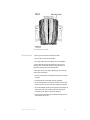
atrial contractions appear for each cycle (Figure 4-25 on page 90), measure
the time between the first atrial peaks in two successive cycles; and then,
measure the period between the second atrial peaks in successive cycles.
Questions
1 What is the effect of cold frog Ringer's solution on the rate and the
amplitude of the ventricular contraction? What mechanism is responsible
for this effect?
2 What effects do Acetylcholine and Epinephrine have on the heart rate?On
the amplitude of ventricle contraction?
3 How do Acetylcholine and Epinephrine produce their effects on the heart
rate? On the amplitude of ventricle contraction?
4 What effect does Atropine have on the heart? How does Atropine work?
5 Do the time courses for the effect of each drug on the amplitude and the
rate of ventricle contraction differ? Why?
6 When, in the cardiac cycle, does the refractory period for the ventricle
occur?
7 What is the significance of the long refractory period to the function of the
heart?
8 How doe the ligature across the AV groove work to separate the atrial and
ventricular contractions?
9 In the ligatured heart, the atria and ventricle beat at their own rate. Which
rate is closest to the heart rate seen before the ligature?
10 Where are the pacemakers for the atrial and ventricular rhythms?
Chapter 4: Muscles and Movement
93