1
Delete Tables
Delete Tables
Enterprise Replication creates delete tables only if you use time stamp
and/or a procedure written in SPL (Stored Procedure Language) as your
conflict-resolution rules. Delete tables keep track of modified rows and are
used for conflict resolution. Enterprise Resolution creates and manages these
tables. Neither the end user nor the database administrator interacts directly
with the delete tables.
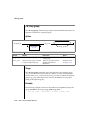
Delete tables are created on the database server where the data originates and
on all the database servers to which data gets replicated. Delete tables are
stored in the same dbspaces as their base tables.
If the base table has 100 megabytes of data, but only half the rows might be
deleted or modified, then 50 megabytes is a reasonable estimate for the size
of the delete table.
Tip: Delete tables are automatically deleted when the last replicate defined with
conflict resolution on a table is deleted.
Spooling Directories
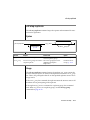
The aborted-transactions spooling (ATS) and row-information spooling (RIS)
hold information about failed transactions. The default location for these
directories is /tmp (UNIX) or \tmp (Windows NT). Informix recommends
that you not leave the spooling directories in the default location but assign
them to directories that you control.
For information about ATS and RIS, refer to Chapter 10, “Diagnosing Enterprise Replication.”
Setting Up Your Replication Environment
5-7