1
Chapter 3: Overview
7
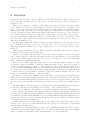
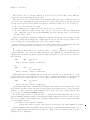
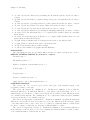
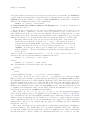
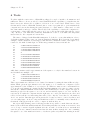
The absolute error (or absolute difference) is given by the absolute value of the difference
between the values appearing in the two files.
The relative error (or relative difference) is actually defined in a more complicated way. If
“n1” is the value appearing in the first file and “n2” is the value in the second file, then the
absolute error is given by the formula “A=|n1-n2|”, while the relative error “R” is given by:
• “R = 0” if “n1” and “n2” are equal,
• “Inf” (infinity) if “n2” differs from “n1” and at least one of them is zero,
• “R = A/ min(|n1|, |n2|)” if “n1” and “n2” are both non zero and “n2” differs from
“n1”. “min(|n1|, |n2|)” denotes the minimum between the absolute value of “n1” and the
absolute value of “n2”.
I have to remark that, with these definitions of absolute and relative error it turns out that
A(n2, n1) = A(n1, n2) and R(n2, n1) = R(n1, n2). In other words, the absolute/relative error
does not change if you only change the order of the compared values.
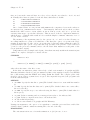
If the contents of a field are, in at least one of the compared files, non-numerical, then the
output line reporting absolute and relative errors is replaced by the separator:
@
@@
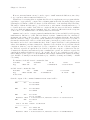
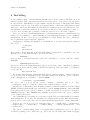
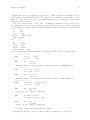
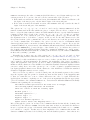
It can happen that a line in one of the two files to compare contains more fields than the
corresponding line of the other file. When this is the case, numdiff reports this difference by
telling that a certain line (identified by its line number) appears to be shorter in one of the two
files, just as in
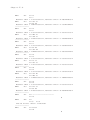
##1
#>6
<== water
==>
Line 1 in file "list2" is shorter!
or in
##3
#>1
<==
==> A new line
Line 3 in file "list1" is shorter!
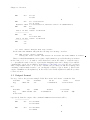
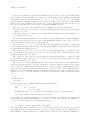
When this is the case, numdiff also shows the tail of the line as it appears in one of the
compared files. Moreover, it uses the notation “#>n” to indicate the number n of the first field
in the longer line for which there is no corresponding field in the shorter line. For instance,
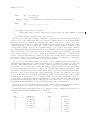
##1
#>6
<== water
==>
Line 1 in file "list2" is shorter!
means that all the fields of the first line starting from the sixth one are empty in the second
file (‘list2’). In this context, the symbol <<*>> (when it appears) is used to denote the EndOf-File, i.e. a line or the tail of a line which is located at the end of the corresponding file and
does not have a terminating newline character.
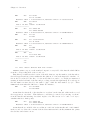
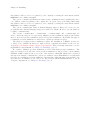
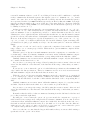
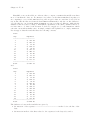
It can also happen that one of the two files to compare has less lines than the other one. In
this case numdiff prints the number of the first line which compares in only one of the two files.
Moreover, it prints on the standard error a message telling in which of the two files the end has
been prematurely reached:
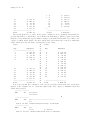
***
End of file "list1" reached
Likely the files "list1" and "list2" do not have the same number of lines !
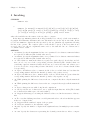
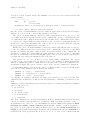
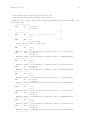
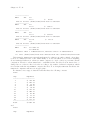
At last, numdiff prints on standard output a message reporting the final status of the comparison. This message says either the two files are equal or they are different, just as in the
example we are considering: