1
18
Representing States and Actions
the use of their index. Here, knowing the index suffices and no direct interpretation
of states or actions is needed.
The main strength of using state enumeration is simplicity. At the same time,
simplicity is also the main weakness. This is because it may prove too simple to
use in some applications that does not settle for identifying states and actions using
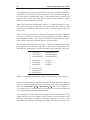
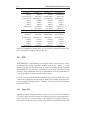
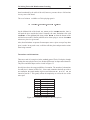
just simple numbers. In Table 2.1 the dialog between the environment and the
agent is based on a represention form like state enumeration.
3.2 Propositional Representations
Propositional representation is a representation form that corresponds to describing a state as a so-called feature vector. This vector then holds an attribute for
each possible property of the environment of the agent. An attribute here could be
Boolean, an enumerable range, a continuous value, and so forth.
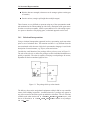
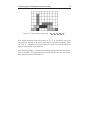
The game of Tic-Tac-Toe, as seen in Figure 2.1, is a good domain for making use
of a propositional representation form. Each of the nine cells can either be empty
or hold the X or O -symbol. This simple domain can be represented using a feature
vector of length nine, where each attribute att 2 fempty; X; O g.
Using Figure 2.1 the feature vector is f = fX; O; O; O; X; X; empty; empty; X g
when representing the Tic-Tac-Toe board from left to right, top to bottom. The
X -agent could then use this representation form to learn that placing a X in the
center of the board with f = fX; O; O; O; empty; X; empty; empty; X g would
make it win the game.
Also, the agent could use the feature vector to determine the positions of the
board that makes it impossible for it to win. An example here could be a situation f = f?; O; ?; ?; O; ?; ?; empty; ?g, where ? denotes an insignificant attribute
value, independent of the outcome. In any case, the X -agent would lose and receive a negative reward if it left such a board configuration to the opposing player.
Obviously, the agent should here learn how to avoid ending up in such a situation.
A weakness of using a propositional representation approach is that a problem
arises when trying to describe attribute properties and relations that may/may not
exist between different states. An example here could be the problem of not being
able to represent that not placing an X next to any two adjacent O ’s would result in
the agent losing the game. Also, propositional representations fail when applied to
a dynamic domain where the number of objects being represented is changed over
time, or unknown at first.
Propositional representation methods can be used in situations, where a more ex-