1
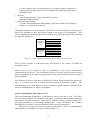
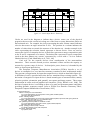
effect across all levels. The search guidance provided by the requester underpins the reason
for trimming the search space in the following circumstances:
(i) knockout devices - the pool of devices participating is restricted to those having
resources available to be accessed
➜ this is because there is no possibility of access to a device where resources are
already allocated
(ii) knockout alternatives - only request alternatives representing an improvement over
any existing match will even be tried
➜ an existing match can only be replaced if it is improved upon, as evidenced by
the requester assigned priority to alternatives
(iii) knockout alternatives - a request alternative will be rejected when any of its
requests fail to match
➜ an alternative must match all its requests, otherwise it is not the alternative
sought as a crucial request is missing, one of a differing priority must be sought
instead
(iv) knockout requests - a request will be rejected when any of its RQGroups fail to
match
➜ a request must match all its RQGroups, otherwise it is not the request sought
with one missing
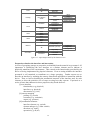
(v) knockout RQGroups (includes structural descriptions) - each RQGroup can only
be satisfied by DGroups from the device which is bound to the current request
➜ a device description consist of a set of DGroups hence once a device is bound
to a request, the number remaining to be checked reduces
(vi) knockout modules - resource availability at the level of device elements
determines whether a deeper search of a structural description proceeds.
➜ where a sub-branch is associated with a resource and recorded as unavailable, it
is skipped over & a null sub-match returned, all without checking deeper.
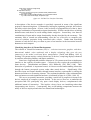
5.4.3 Managing Backtracking
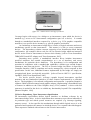
A further narrowing of the search is provided by managing the backtracking facility built
into the Prolog runtime environment. This, however, requires careful management in terms
of when it is engaged during the process and when its use is inhibited. The process avoids
making assumptions about the suitability of devices being composed. It does not presume a
suitable match can be found or that multiple devices will be required. Our intention is to be
flexible in terms of the process composing what it finds in a particular context. At specific
points, we seek to improve efficiency by forcing the backtracker to continue the search for
further solutions and, at other points, we place constraints on which avenues to pursue.
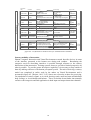
Point to engage backtracking
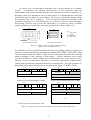
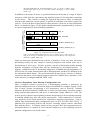
Exhaustive searches are managed according to the problem domain. This means that at
distinct points in the match process, backtracking is engaged to continue pursuing
satisfaction. The failure to meet a particular constraint acts as the trigger in the following
circumstances (refer back to the discussion under guiding the search):
140