1
Chapter 3
3.3
3.3.1
Hardware
The VME-Bus system
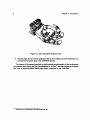
The Ironics IV-3201 Single Board Computer
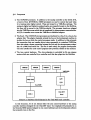
This processor board forms the main workhorse of the multi-micro-processor controller
hardware. The Ironics IV-3201 Processor board is a powerful single-board computer based
on the Motorola 68020 microprocessor, coupled with the fast 68881 floating-point unit. In
addition to the microprocessor, many other functions are provided on-board as described
below.
An industry-standard 28-pin byte-wide memory socket is provided to hold a PROM
which contains up to 32 Kbytes. This prom is used to provide the monitor which bootstraps
user programs.
The board contains one megabyte of RAM, which may be expanded to a total of four
megabytes if desired. This no wait-state, dead-lock protected RAM is dual-ported; i.e it
may be accessed either locally by the processor, or as a VME-Bus Slave by another device.
Memory base addresses may be jumpered to start at any of a set of predefined locations.
It is necessary that the dual port address of every board in a system be configured correctly
for the software to operate correctly (see Appendix B, for this configuration information).
The Ironics single board computer is adequately described in the document titled IV3201 68020 CPU Board - User's Guide, which is available from Ironics, Inc. Please refer to
this document for further information regarding the features it has, and for board-specific
configuration information.
3.3.2
VME-Bus
The individual ironics cpu boards are all plugged into the industry standard VME-Bus
backplane. More documentation on the VME-Bus can be found in the document titled The
VME-Bus specification manual which is available from a number of manufacturers. This
document is also known as the IEC 821 Bus and the IEEE P1014/D1.0.
The VME-bus specification provides for a variety of options. The version of the backplane we use in our system is based on the J1-J2 two-high connectors each of which are 96
pins.
The bus specification includes provisions for data transfer, interrupts and bus arbitration. It specifies a bus that has 32 bits of address and data and 5 bits (or 32 values) for
address modifier codes. This enables address cycles on the bus to be further distinguishable
by the code that is passed on the modifier lines, and obviates the need for specialized i/o
spaces.
The VME-Bus'es different address spaces are mapped into separate blocks of the full 32
bit address space on the Ironics 3201 processor board. Please see the document titled IV3201 68020 CPU Board available from Ironics, for the particular mapping that is currently
available from them.
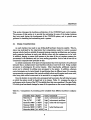
The VME-Bus provides for 4 different levels of bus requests and grants. We have chosen
to put all the Ironics cpu boards at bus request level 3 (BR3). The synergist-3 type of
bus-to-bus adaptor is configured to run at level 2 (BR2) while the hve-2000 type of adaptor
is configured to run at level 3 (BR3).