1
Air conditioning system
(General requirements)
Air conditioning systems are recommended where room temperatures
reach extremely high levels or where very unstable conditions prevail,
while high precision requirements have to be met.
Current air-conditioning systems feature the operating states:
• off
• part capacity (normally 30%)
• full capacity
The most suitable air conditioning systems are those with sufficient
capacity to maintain the temperature at a constant ± 1° C throughout
the day, but allowing the room temperature to follow seasonal variations. Another more costly variant would be a "Super" installation
maintaining a room temperature of 20°C ± 0.5°C throughout the whole
year.
Depending on their refrigerating capacity, air conditioning systems can
also be real "cold air factories" having a negative effect on the accuracy of a machine.
Note the following points when selecting an air conditioning system:
• Choose systems with a large ∆t-coefficient, i.e. avoid those which
blow out air too cold (disproportionate relationship between refrigerating capacity and quantity of air circulated).
• Avoid airflows directly on to the machine. Systems must be installed in such a manner that the cooled air can mix effectively with
the room air near the ceiling and then "trickle down". Perforated
hollow ceilings are ideal in this respect.
• Unnecessary heat sources should be removed from the room.
Systems combining efficient performance with moderate cost are
available on the market in different variants. The decisive points for a
good cost/performance ratio are a small ∆t-coefficient and dissipated
thermal output (especially with high value systems).
Calculating the capacity of an air
conditioning system
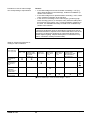
The following factors must be taken into account for determining the
required capacity of an optimal air conditioning system (not exhaustive):
• Room air volume
• Room air temperature
• Room in
• Thermal output to be dissipated
The factors room air volume, room air temperature and room insulation are dependent on the installation site and are accordingly within
your area of influence. The factor "thermal output to be dissipated" is
dependent on the number and output of all heat sources contained in
the room (machine systems, equipment etc.).
Agiecut Cla, Cha, Evo, Exc
©AGIE 06.2002
C2.1
20
Technical data, Place of installation, Connections, Transport